Industrial automation is revolutionizing the way companies operate, and industrial robots are a key piece in this transformation. According to recent studies, the industrial robot market will grow by 12% annually in the coming years, driven by the need for efficiency and precision in sectors such as automotive, logistics, and manufacturing. But how do you choose the right robot for your business? In this article, we will explore the main types of industrial robots, their advantages, disadvantages, and applications, to help you make the best decision.
1. Articulated Robot
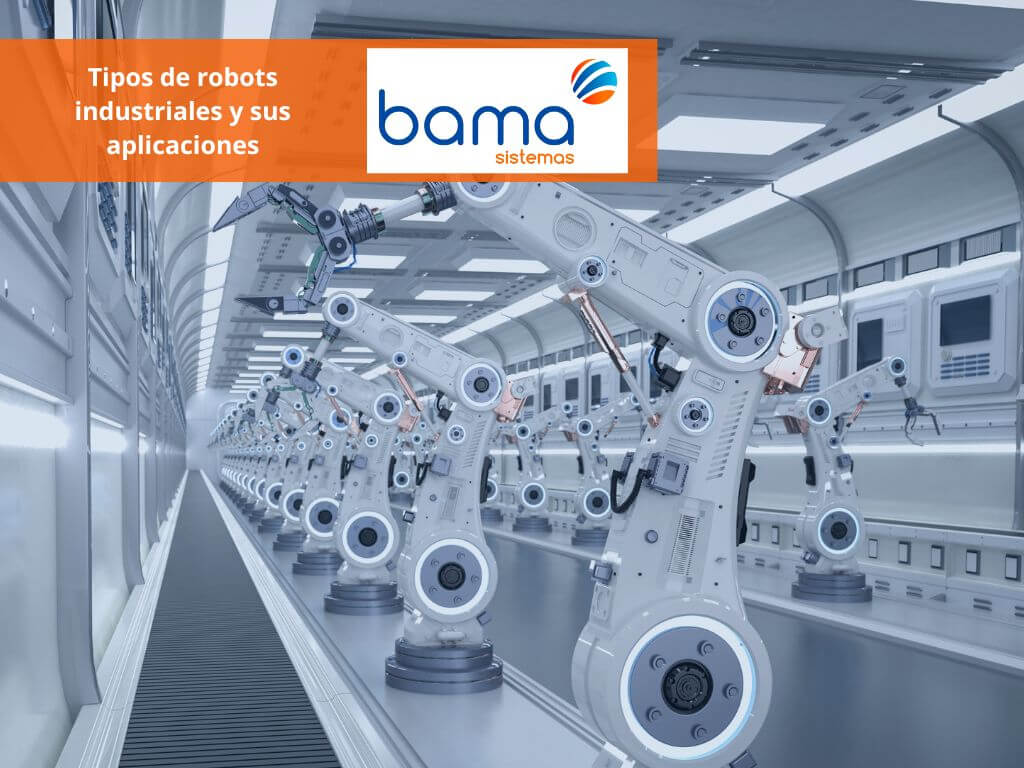
Articulated robots are one of the most popular and versatile solutions in industrial automation. Thanks to their multiple joints, these robots offer great flexibility and mobility, making them ideal for a wide variety of tasks in industrial environments. Their design, which mimics the movement of a human arm, allows them to perform complex movements with high speed and precision, making them an indispensable tool in modern industry.
Advantages of articulated robots:
- High speed and precision: Articulated robots are known for their speed and accuracy in repetitive tasks, making them perfect for high-performance production lines.
- Great reach and load capacity: Thanks to their multiple joints, these robots can reach difficult-to-access areas and handle heavy loads with ease.
- Adaptability to different industrial tasks: Their versatility allows them to be used in a wide range of applications, from assembly to welding and material handling.
- Efficiency in confined spaces: Despite their size, articulated robots can operate in limited spaces, optimizing the use of the work area.
Disadvantages of articulated robots:
- High acquisition and maintenance costs: The advanced technology and complexity of these robots involve a significant initial investment and ongoing maintenance costs.
- Complex programming in some models: Configuring and programming articulated robots can require specialized knowledge, which can increase implementation costs.
- Space required for installation: Although they are efficient in confined spaces, some models may require large areas for installation and operation.
Applications of articulated robots:
- Assembly in production lines: Their precision and speed make them ideal for assembly tasks in industries such as automotive and electronics.
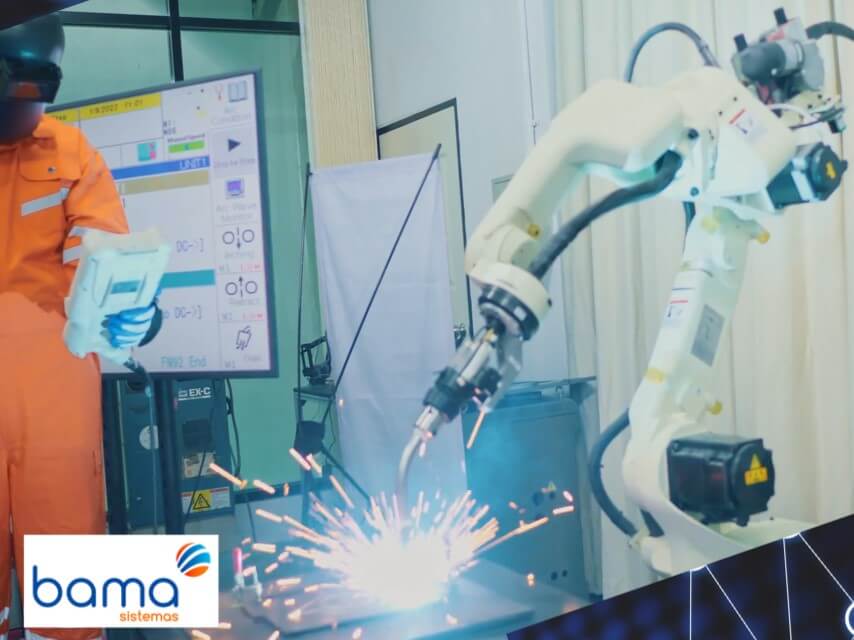
- Automated welding: Articulated robots are widely used in arc and spot welding processes, ensuring high quality and consistency in joints.
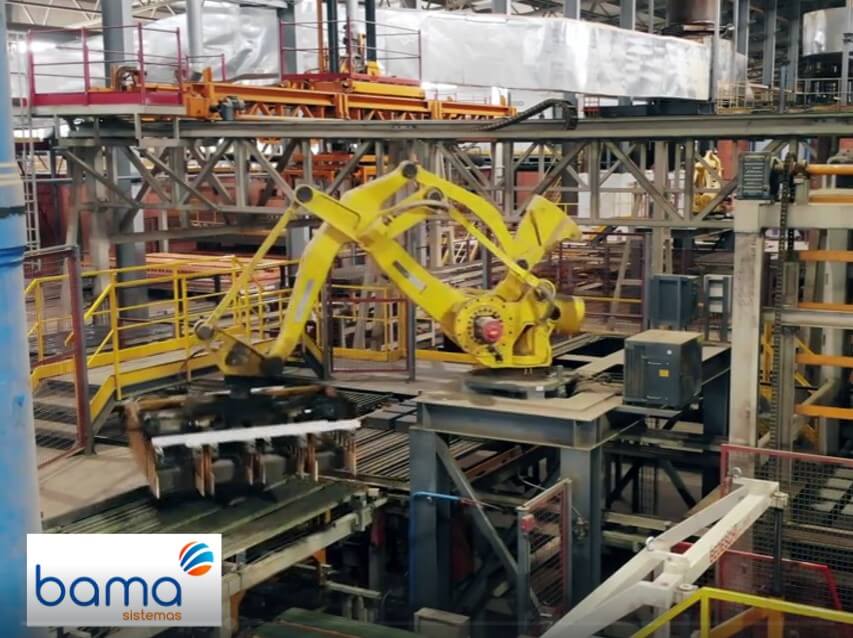
- Heavy material handling: In sectors such as logistics and manufacturing, these robots are capable of moving and transporting heavy loads efficiently.
- Painting and coating: Their precision and flexibility make them perfect for painting and coating applications in the automotive and aerospace industries.
- Inspection and quality control: They can perform measurement and part verification tasks with high accuracy, ensuring that products meet quality standards.
2. Cartesian Robot
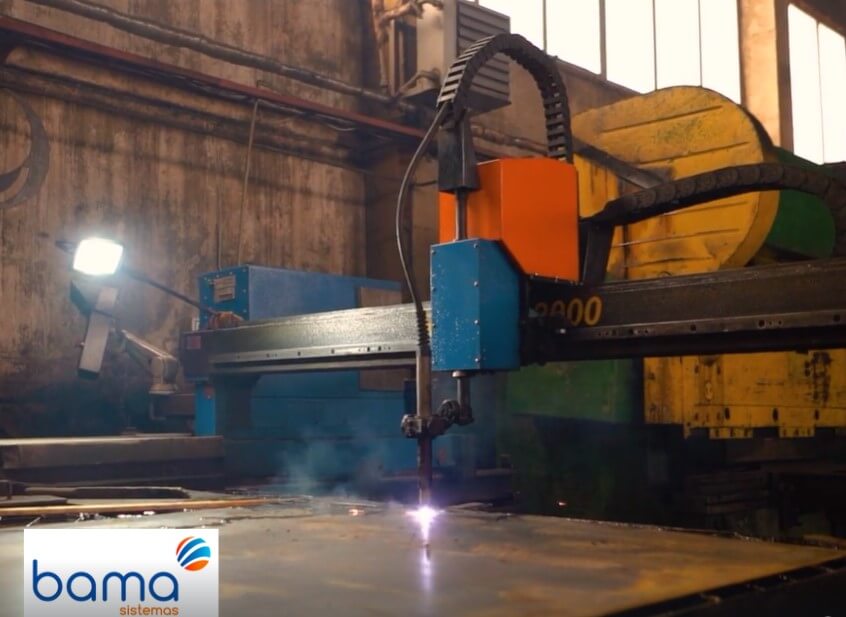
Cartesian robots, also known as rectangular coordinate robots, are automated systems that operate on three linear axes perpendicular to each other: X, Y, and Z. This design allows them to perform precise and repetitive movements within a given area, making them an ideal choice for industrial tasks that require accuracy in rectilinear displacements.
Advantages of Cartesian robots:
- High precision in linear movements: Thanks to their configuration based on rectangular coordinates, these robots can perform exact and controlled displacements, which is fundamental in applications demanding high precision.
- Simple structure and easy to program: Their mechanical design is relatively simple compared to other types of industrial robots, facilitating their programming and maintenance. This makes them accessible to different industries without the need for a large investment in training.
- Reduced cost: Compared to more complex robots, such as articulated or SCARA robots, Cartesian robots have a lower cost in both acquisition and maintenance.
Disadvantages of Cartesian robots:
- Limited mobility: Unlike articulated or delta robots, Cartesian robots can only move in straight lines, restricting their ability to perform tasks that require greater flexibility.
- Dependence on a fixed structure: Their installation requires a stable structural frame to support their mechanism, which can involve restrictions in terms of space and relocation.
- Lower flexibility: Being designed primarily for linear movements, they are not the best choice for tasks requiring turns or complex maneuvers.
Applications of Cartesian robots:
- Cutting and machining of parts: They are used in industrial processes where high precision in movement is required to manufacture components exactly.
- 3D printing and laboratory automation: Their controlled movement capability makes them ideal for 3D printers and automated systems in scientific environments.
- Electronic assembly: They are widely used in the manufacture of electronic circuits, where component placement must be performed with millimeter accuracy.
3. Cylindrical Robot
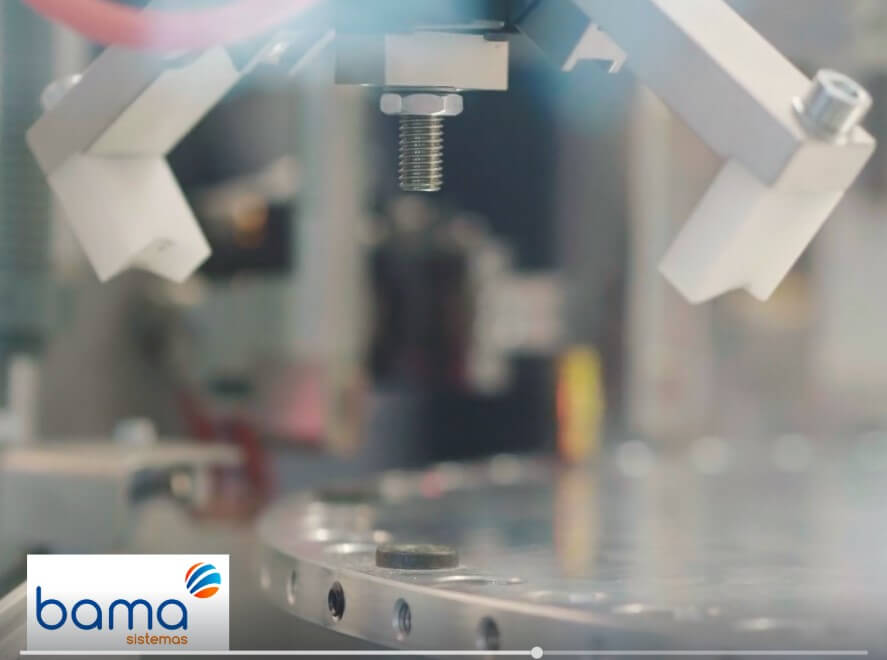
Cylindrical robots are automated systems designed to move within a cylindrical coordinate system, combining rotational and linear movements. Unlike Cartesian robots, these can rotate around a central axis, allowing them to operate in a wider range without needing to move completely. Their structure makes them ideal for environments where space is limited and object manipulation with some freedom of movement is required.
Advantages of cylindrical robots:
- Greater efficiency in confined spaces: The ability to move in a cylindrical pattern allows them to make better use of the workspace compared to Cartesian robots, making them ideal for factories with compact production areas.
- Good load capacity: Thanks to their structural design, these robots can handle moderately heavy loads without compromising stability or precision in their movements.
- Versatility in industrial applications: Cylindrical robots are used in various industries due to their ability to perform tasks such as assembly, welding, and material handling in automated environments.
Disadvantages of cylindrical robots:
- Limited reach compared to articulated robots: Although they offer more mobility than Cartesian robots, their range of action is still smaller than that of articulated robots, which can limit their use in some industrial applications.
- More complex programming: Their combination of linear and rotational movements makes their programming more complicated than that of Cartesian robots, which can increase implementation time in certain processes.
Applications of cylindrical robots:
- Automated assembly: They are widely used in assembly lines where precision and repeatability are required in tasks such as welding, part placement, and electronic component assembly.
- Material handling in production lines: They are used to load and unload parts in CNC machines, handle materials at workstations, and perform packaging tasks in industrial environments.
4. Polar Robot
Polar robots are automated systems characterized by their rotating base and an articulated arm with rotation and translation axes. Their design allows for a wide range of action, making them ideal for tasks that require reach in multiple directions. Thanks to their mobility, these robots can access hard-to-reach areas, facilitating their integration into various industrial processes.
Advantages of polar robots:
- Wide range of action: Their design allows them to cover large work areas without needing to move physically, making them efficient for tasks where reaching multiple points without displacement is required.
- Good load capacity: The robust structure of these robots allows them to handle heavy materials and large tools, making them suitable for demanding industrial applications.
Disadvantages of polar robots:
- Lower precision in fine movements: Although they have a great reach, their design can make their movements less precise compared to Cartesian or cylindrical robots, limiting their use in tasks that require high accuracy.
- Complexity in programming and maintenance: Due to their combination of rotational and linear movements, the programming and calibration of these robots can be more complex, in addition to requiring specialized maintenance.
Applications of polar robots:
- Industrial painting and coating: Their great reach allows them to apply paint and coatings on large surfaces, ensuring uniform coverage in the automotive and manufacturing industry.
- Material handling in warehouses: They are used in tasks such as loading and unloading materials, sorting, and organizing products in large warehouses, optimizing logistics and reducing work times.
5. SCARA Robot
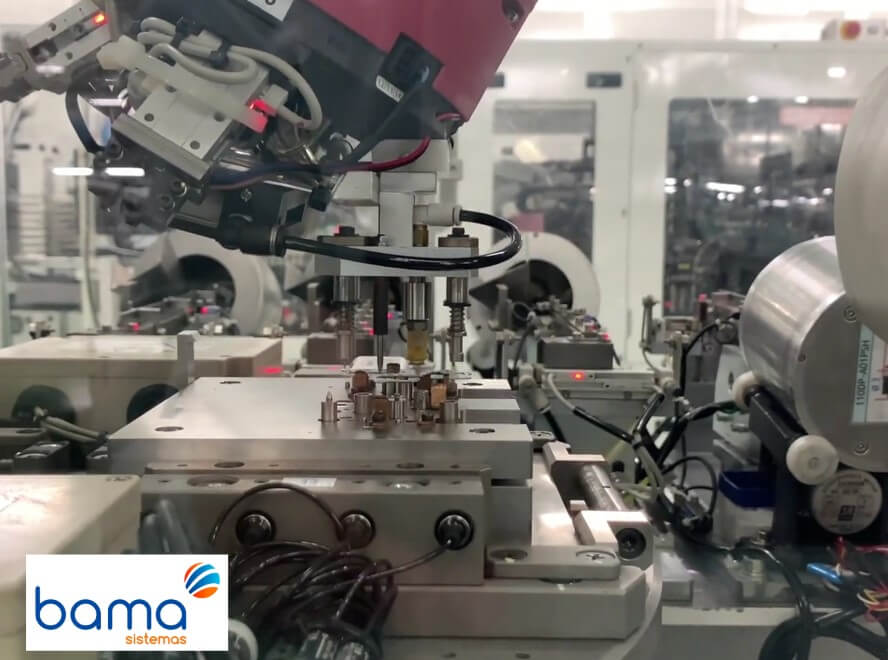
SCARA robots (Selective Compliance Assembly Robot Arm) are one of the most popular solutions in industrial automation, especially for tasks requiring high speed and precision in horizontal movements. Their compact and efficient design makes them ideal for confined spaces and assembly applications.
Advantages of SCARA robots:
- High speed and precision: SCARA robots are known for their speed and accuracy in repetitive tasks, making them perfect for high-performance production lines.
- Compact structure: Their lightweight and small design allows them to be installed in limited spaces, optimizing the use of the work area.
- Easy integration: They are compatible with a wide variety of automation systems, facilitating their implementation in existing industrial environments.
- Low maintenance cost: Thanks to their mechanical simplicity, SCARA robots require less maintenance compared to other types of robots.
Disadvantages of SCARA robots:
- Limited mobility: They can only perform horizontal movements, which restricts their use in applications requiring complex movements across multiple axes.
- Moderate load capacity: Although efficient in precision tasks, they are not suitable for handling extremely heavy loads.
- Lower flexibility: They are not as versatile as articulated robots for tasks requiring a wide range of motion.
Applications of SCARA robots:
- Electronic component assembly: Their precision makes them ideal for placing and soldering components on circuit boards.
- Palletizing and packaging: They are widely used in the food and pharmaceutical industry to organize products in boxes or pallets.
- Inspection and quality control: They can perform measurement and part verification tasks with high accuracy.
- Handling of small parts: In sectors such as automotive and electronics, they are perfect for handling small and delicate components.
- Medical applications: In the manufacture of medical devices, SCARA robots are used for assembly and sterile packaging tasks.
6. Delta Robot
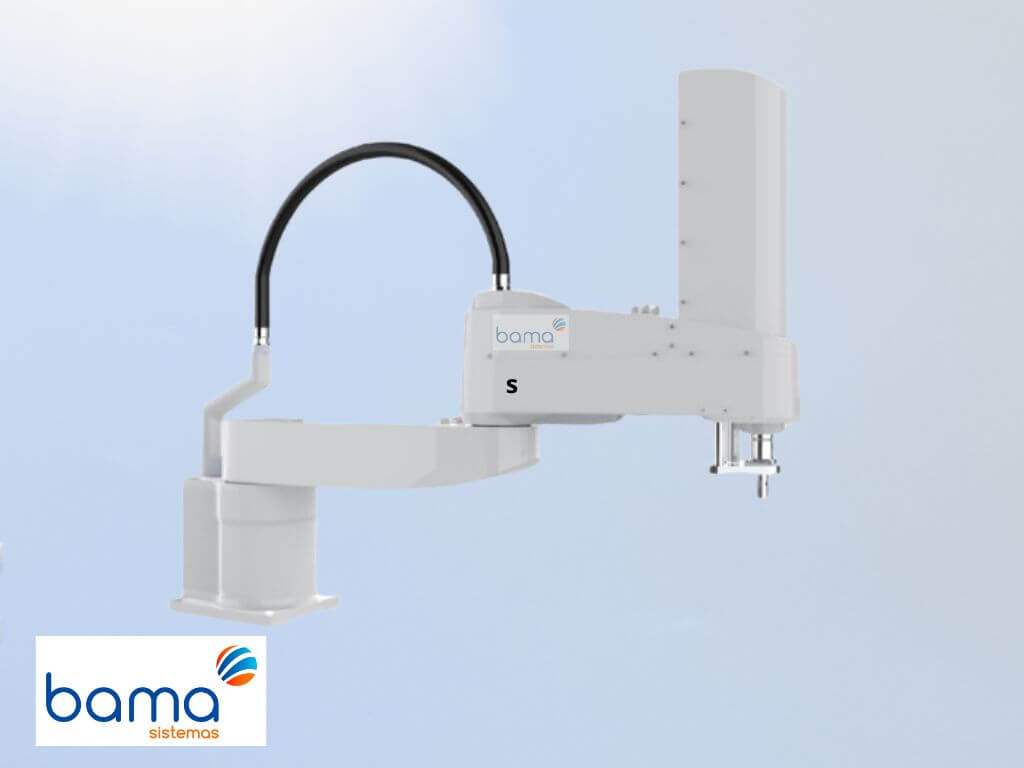
Delta robots are high-speed and high-precision systems designed with a parallel structure that allows them to perform ultra-fast movements. They are widely used in industries requiring rapid handling of small parts, such as food, pharmaceutical, and electronics.
Advantages of Delta robots:
- Extreme speed; due to their lightweight structure and parallel design, Delta robots can perform movements in milliseconds, maximizing production efficiency.
- High precision: Their ability to position parts with great accuracy makes them ideal for delicate assemblies and automated packaging.
- Optimized structure: Their compact and modular design allows for better use of space in high-demand production lines.
Disadvantages of Delta robots:
- Limited load capacity: Due to their lightweight structure, they are not suitable for handling heavy objects.
- Defined workspace: Their design restricts their operating area to a specific space, which limits their flexibility compared to other industrial robots.
Applications of Delta robots:
- Food and pharmaceutical industry: They are used in the packaging and handling of perishable products, ensuring hygiene and speed.
- Packaging and handling of small parts: They are essential in the electronics and manufacturing industry for precision assemblies.
- Automatic sorting and selection: They are used in high-speed sorting systems, such as in the consumer goods industry.
- 3D printing and micro-assembly: Thanks to their precision, they are integrated into advanced additive manufacturing and micro-production technologies.
7. Collaborative Robot (Cobot)
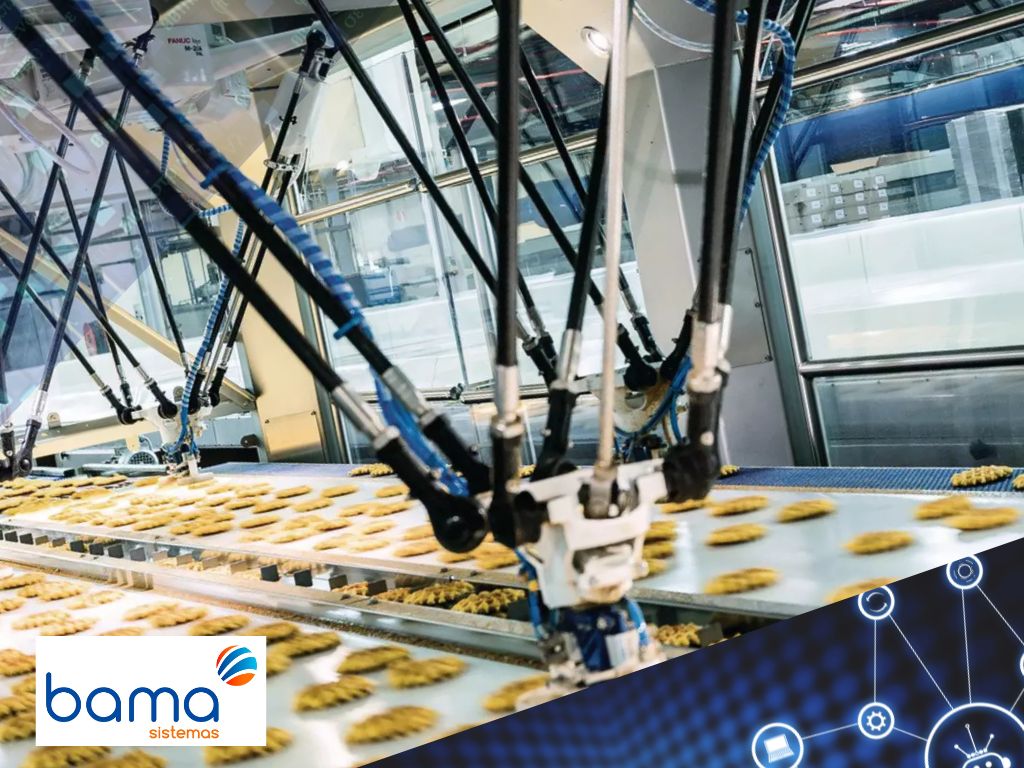
Collaborative robots, or cobots, represent a new era in industrial automation, designed to work alongside humans safely and efficiently. Unlike traditional industrial robots, which operate in restricted areas isolated for safety reasons, cobots are equipped with advanced sensors and collision detection technologies that allow them to interact directly with people without the need for safety barriers.
These robots are transforming modern manufacturing by making automation more flexible, accessible, and adaptable to different work environments.
Advantages of collaborative robots:
- Enhanced safety for interacting with humans: They incorporate sensors and detection systems that automatically stop movement in case of contact with a person, reducing the risk of accidents.
- They can operate without safety cages, which optimizes factory space and allows for easier integration.
- Easy programming and adaptability: They are intuitive and can be programmed by operators without robotics experience, using graphical interfaces or manual teaching.
- They adapt to multiple tasks within production, allowing for quick changes on the assembly line without the need for complex reconfiguration.
- Cost reduction and fast return on investment (ROI): Their implementation is usually more economical than that of traditional industrial robots, as they require less safety infrastructure.
- By working alongside humans, they optimize production without the need to completely replace labor.
Disadvantages of collaborative robots:
- Lower speed compared to other robots: Due to their safe-for-human design, cobots operate at reduced speeds compared to traditional industrial robots.
- Reduced load capacity: They are not designed to handle heavy loads, making them less suitable for tasks requiring the manipulation of large volumes of material.
- Limitations in precision and force: Although precise, they may not be the best choice for applications requiring extremely exact movements or high resistance.
Applications of collaborative robots:
- Assembly in factories with human workers: They are used to assist in repetitive tasks, such as screwdriving, part assembly, and welding, allowing operators to focus on more complex tasks.
- Inspection and quality control: Thanks to advanced sensors and computer vision, they can detect defects in products and ensure high quality standards.
- Packaging and palletizing: They facilitate the efficient organization of products in packages and pallets, especially in the food and pharmaceutical industries.
- Laboratories and medical sector: They are used in laboratory test automation, sample handling, and medical device production.
- Customer service and retail: In some sectors, such as supermarkets and hotels, cobots are beginning to perform customer assistance roles.
How to choose the ideal type of industrial robot
The selection of the right industrial robot depends on several key factors:
- Type of task to be performed: Do you need a robot for welding, assembly, or material handling?
- Available budget: Consider not only the initial cost but also maintenance and operating expenses.
- Space and work environment: Do you have space limitations or do you need a collaborative robot to work alongside your employees?
Ready to take your production to the next level with industrial robotics? At BAMA, we are experts in automation and can help you implement the perfect solution for your business. Contact us today and discover how we can optimize your processes!
We hope you found this article of interest.
At BAMA, we help you evaluate your needs and find the perfect industrial automation solution for your business. Our experts are ready to advise you on the selection, implementation, and maintenance of any type of industrial robots.
Frequently asked questions about types of industrial robots
1. How to choose the most suitable type of robot based on available space?
If you have limited space, robots like SCARA or Delta are particularly efficient due to their compact design. However, if you need greater reach or heavy handling, articulated or polar robots may be a better choice, always with proper workspace planning.
2. Which type of robot is easiest to reprogram or reconfigure for new tasks?
Collaborative robots (cobots) stand out for their ease of programming and adaptability. They allow for quick task changes thanks to intuitive interfaces or manual teaching modes, ideal for dynamic environments where constant flexibility is required.
3. Which robot should be used when handling very small or delicate parts is required?
Delta robots are excellent for these types of applications. Their lightweight structure, high speed, and millimeter precision make them ideal candidates for handling small parts in industries such as electronics, pharmaceuticals, or consumer goods.
4. Is it cost-effective to use articulated robots in SMEs or is it only for large companies?
Although articulated robots involve a higher investment, their productivity, precision, and flexibility can justify implementation in SMEs looking to automate critical processes. Furthermore, with proper sizing and adaptation phases, the investment pays off quickly.
5. Which robot is most resistant in environments with dust, humidity, or high temperatures?
The resistance of robots depends on both the type and its manufacturing. Some articulated and polar models are available with specific protections (IP67, anti-corrosive materials), making them more suitable for aggressive industrial environments.
6. Can industrial robots operate alongside workers without increasing risk?
Only collaborative robots are designed to work without safety cages and in direct collaboration with people. They incorporate proximity sensors and collision detection that stop their movement upon detecting contact, improving environment safety.
7. What type of robot is most suitable for an environment with highly variable production needs?
In environments with production variability, cobots and articulated robots offer better adaptability. Cobots allow for quick adjustments between tasks, while articulated robots offer the versatility needed to adapt programs to new processes or layouts.