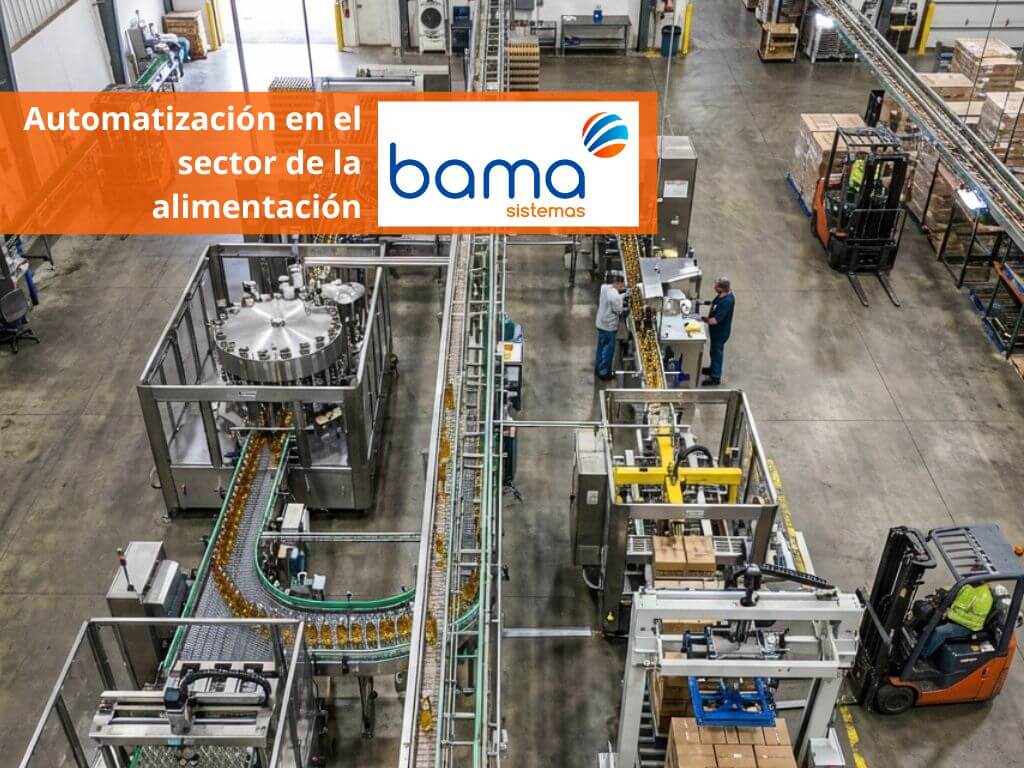
If you are looking to optimize your food plant, reduce costs, increase productivity, and ensure regulatory compliance, this article is for you. Automation in the food sector is not just a trend: it has become a strategic necessity.
Companies across Spain are transforming their production lines through technologies such as PLCs, SCADA, industrial robotics, and smart sensors, achieving more efficient, safe, and traceable processes. Here you will discover why automating your plant is key to remaining competitive and how a partner like Bama can help you achieve it.
What is process automation in the food industry?
Process automation means integrating specialized machinery and control software to execute tasks continuously and precisely, minimizing human intervention. In the food sector, this ranges from the reception of raw materials to the final packaging of the product.
Among the most commonly used technologies are:
- Programmable Logic Controllers (PLCs)
- Supervisory Control and Data Acquisition (SCADA) systems
- Industrial robots for repetitive or heavy tasks
- Smart sensors that allow real-time control of critical variables such as temperature, weight, or humidity
These solutions allow for maintaining product quality, ensuring hygiene, optimizing resources, and reducing human error.
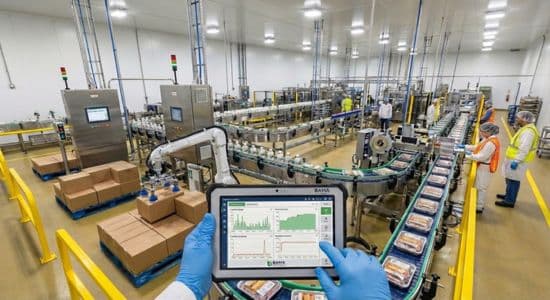
Key benefits of automating a food plant
Automating a food plant goes far beyond incorporating technology: it is a strategic decision that directly impacts the safety, efficiency, and profitability of the business. Below, we explore the most relevant benefits for any company in the sector that wants to stay competitive.
Food safety and hygiene
By minimizing manual contact, the risks of cross-contamination are reduced. Automated systems rigorously control sanitary conditions and critical parameters, complying with the most demanding regulations.
Increased efficiency and productivity
Automated lines operate 24/7, eliminating bottlenecks and increasing production volume without compromising quality.
Reduction of operating costs
Automation in production lines decreases labor costs, optimizes the use of raw materials, and reduces energy consumption, improving margins.
Improved traceability and regulatory compliance
Each batch can be digitally recorded in real time, facilitating audits and ensuring compliance with international standards.
Sustainability and resource optimization
Automated systems allow for more efficient use of natural resources and reduce waste, supporting sustainable production models.
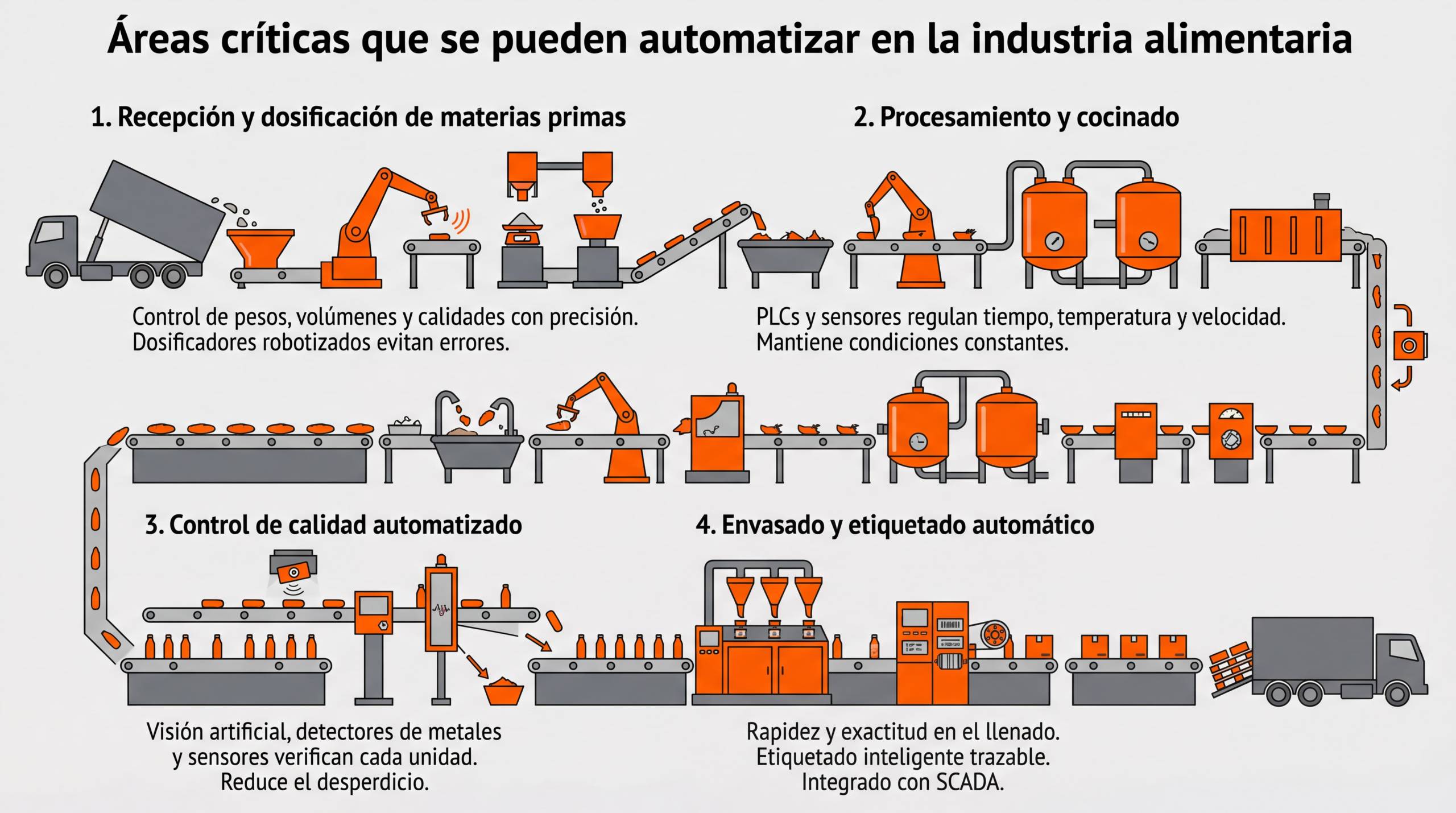
Critical areas that can be automated in the food industry
Automation is not limited to a single stage: it covers the entire production flow. Below, we detail the most important areas that can be optimized through technology, from the arrival of raw materials to the final packaging of the product.
Reception and dosing of raw materials
This phase is key to ensuring uniformity from the beginning of the production process. Automating the reception of raw materials allows for precise control of weights, volumes, and qualities, using sensors and control systems connected to automatic scales. Robotic dosers ensure that each ingredient is incorporated in exact proportions, avoiding human error and improving the quality of the final batch.
Processing and cooking
In this stage, multiple critical operations such as washing, peeling, cutting, mixing, cooking, and cooling are integrated. Through the use of PLCs and connected sensors, it is possible to automatically regulate parameters such as time, temperature, and mixing speed. This allows for maintaining constant conditions in each batch, optimizing yield and ensuring product uniformity.
Automated quality control
In-line product inspection no longer requires human intervention. Computer vision systems allow for the detection of deformations, unwanted colors, or impurities. Metal detectors and weight sensors verify that each unit meets the established requirements. Automating this phase not only increases process reliability but also significantly reduces waste.
Automatic packaging and labeling
Automation in packaging ensures speed and accuracy in filling containers, whether they are liquids, granules, or solids. Added to this is smart labeling, which allows for the application of batch codes, expiration dates, and other critical information without errors. The entire process is traceable and can be easily integrated with SCADA systems for real-time monitoring. From filling to labeling with expiration date and batch, the entire process is executed with precision and high speed.
Automation of packaging and end-of-line systems: the decisive step
The end of the line is one of the most critical and strategic stages within a food plant. Automating this phase allows for closing the production process with maximum efficiency, reducing times, errors, and operational risks. Through specialized technologies, the preparation of products for distribution is optimized, guaranteeing quality, safety, and traceability in each unit dispatched.
- Case erecting and packing: machines that automatically form boxes, group products, and place them according to defined patterns, ensuring speed and order.
- Automatic palletizing: robots designed to stack boxes on pallets in a stable, precise manner and in the shortest possible time, adapting to different product formats.
- Shrink wrapping or strapping application: automatic systems that secure the load on the pallet, protecting products during transport and storage.
- Automated internal transport: conveyor belts or autonomous guided vehicles (AGVs) that move boxes and pallets within the plant, from the packaging area to the warehouse or loading docks.
The role of BAMA Sistemas as a provider of industrial automation solutions
In this context, BAMA Sistemas positions itself as a key technological partner for companies in the food sector that wish to modernize and optimize their plants. BAMA offers:
- Design and implementation of custom solutions with PLCs, SCADA, sensors, and industrial controllers.
- Retrofitting of existing facilities, integrating new technologies without the need to rebuild from scratch.
- End-of-line automation, including palletizers and smart packaging systems.
- Electrical systems and control panels adapted to each process.
With a highly qualified team, Bama guarantees measurable results in productivity, energy efficiency, and operational safety.
Preparing the food industry for the present and the future
Automating is no longer an option, but a requirement to remain competitive. The food sector needs fast, efficient, and safe responses, and automation is the most solid way to achieve them. With partners like Bama, companies can evolve without friction, preparing for the demands of the present and the challenges of the future.
Are you looking to automate your food plant’s process?
Low-Medium