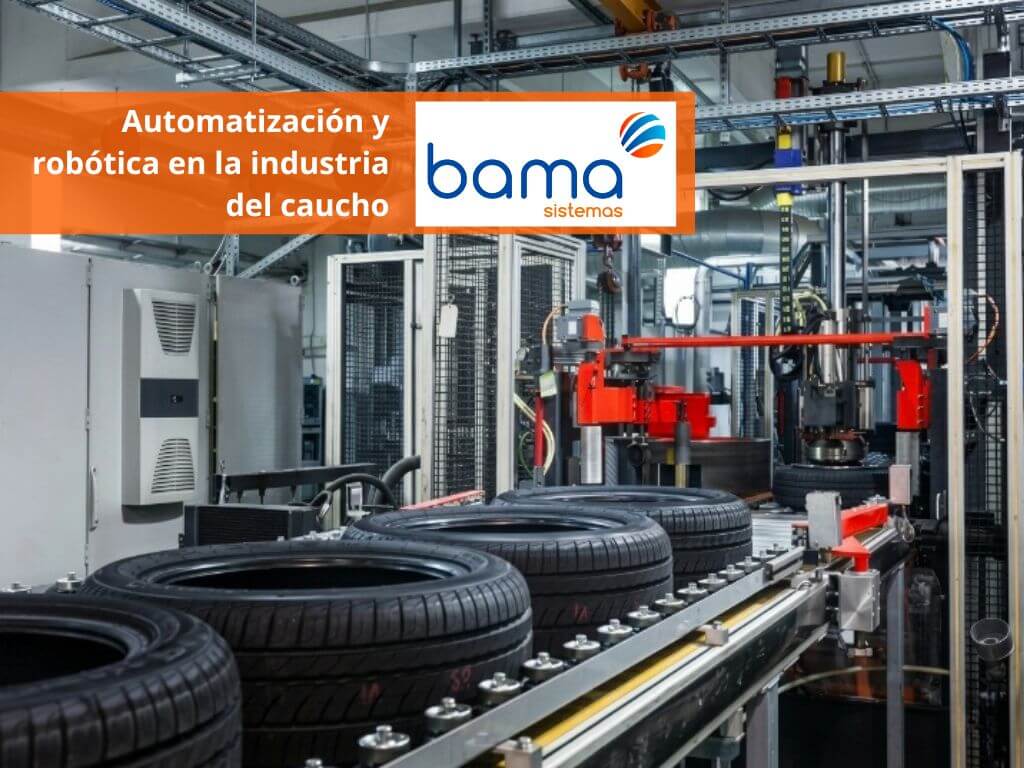
Every rejected batch in a rubber plant tells a story no one wants to hear: a compound that didn’t reach the specified Shore hardness, a press that vulcanized 8 seconds too long because the operator was attending to another machine, a rubber-metal part that reached the customer with internal bubbles. Automation and robotics in the rubber industry exist precisely to prevent these stories from repeating in your plant.
Manufacturers of silent blocks, conveyor belts, track pads, solid tires, and technical parts across Spain are already taking this step: integrating automatic control into their presses, robotizing finishing, and connecting their lines with SCADA systems that provide total process visibility. It’s not a matter of size or budget, but of strategic decision.
Why is automation key in rubber manufacturing?
The rubber sector faces a paradox: it works with processes where precision is everything (temperatures, pressures, curing times, additive dosing), yet many plants still operate with semi-automatic or even manual methods in critical production phases.
This translates into specific problems that any plant manager recognizes:
- Batch variability due to manual dosing of compounds and additives.
- High scrap rates in vulcanization presses due to deviations in temperature and pressure cycles.
- Bottlenecks at the end of the line: cooling, inspection, and palletizing remain slow, labor-dependent operations.
- Lack of digital traceability, hindering regulatory compliance and the detection of recurring failures.
- Increasing energy costs in old equipment without consumption optimization.
Automating is not simply “installing a robot.” It’s redesigning the production flow so that every phase, from mixing to packaging, functions in an integrated, measurable, and repeatable way. And that’s where an engineering and automation company with experience in real industrial environments makes the difference compared to generic solutions.
Automation of Machinery for the Rubber Industry: Presses, Injection Molding Machines, and Mixing Lines
Every machine in a rubber plant has enormous optimization potential when automated correctly. The key is to understand the process’s particularities and adapt the solution, not the other way around.
Automated Vulcanization Presses and Injection Molding Machines
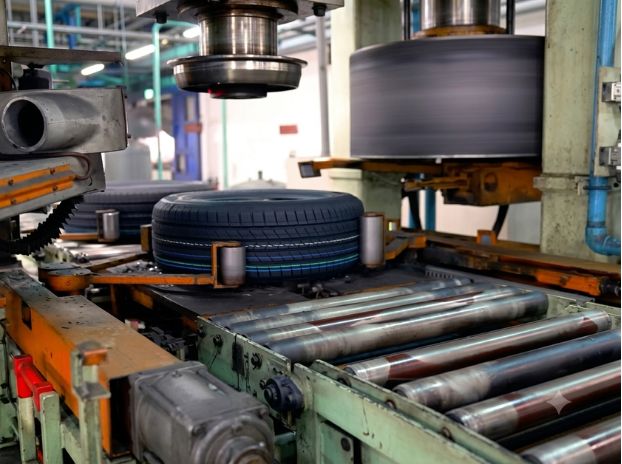
Presses are the heart of any rubber plant. Automating their operation means integrating advanced PID controls that adjust the load according to the material’s Shore hardness, vacuum systems to eliminate bubbles and surface defects, and sensors that monitor each cycle in real time. In injection molding machines, machinery automation for the rubber industry allows for mold changes with minimal manual intervention, precise compound dosing control, and reduced cycle times without compromising the quality of technical parts such as silent blocks, gaskets, or rubber-metal components.
Connected Extruders and Mixing Lines
In the upstream phase, compound homogeneity determines the success of the entire chain. High-precision weighing systems, CNC bale cutters, and automated feeding of internal Banbury mixers eliminate human factor variability.
Robotics in the Rubber Industry: From Finishing to Palletizing
If there’s one phase where robotics in the rubber industry demonstrates its full value, it’s in finishing and end-of-line processes. Rubber parts often have irregular geometries, deformable surfaces, and require careful handling, which historically has limited the automation of these stages.
Today, advanced robotics with artificial vision solve these challenges:
- Robotic deburring of technical parts with repeatable precision that the human hand cannot match.
- Automated flocking of EPDM, TPE, or TPV profiles using robots with plasma guns and proportional glue application, with optical sensors that prevent blockages and line stoppages.
- Automatic palletizing and packaging with position sensor systems that reduce the operator’s ergonomic load and accelerate the flow to the warehouse.
- In-line inspection with metal detectors, markers, and dynamic weighing to ensure no out-of-tolerance part leaves the plant.
The combination of robotic cells with AGVs (Automated Guided Vehicles) for internal transport of molds, raw materials, and finished products closes the loop for a truly efficient plant.
Maintenance and Retrofitting of Machinery in Rubber Plants
A rubber plant cannot afford unplanned downtime. Every hour of inactivity for a press or injection molding machine represents lost production, missed deadlines, and skyrocketing costs. However, many factories still operate with reactive maintenance: repairs happen only when something breaks.
The leap to predictive maintenance based on real cycle counters, vibration sensors, and data analysis allows anticipating breakdowns before they occur. But there’s more: many plants in Spain have machinery with decades of service that functions mechanically well but lacks digital intelligence. Retrofitting (modernizing existing equipment by incorporating PLCs, advanced sensors, and control systems) allows giving that investment a second life without needing to replace the entire machine.
Industry 4.0 in Rubber Plants: PLC, SCADA, and Connectivity
Modern machinery must be a connected entity. The integration of PLC controllers with SCADA platforms allows monitoring the entire plant from a central point: vulcanization temperatures, injection pressures, cycle times, energy consumption, and alarm statuses.
This connectivity enables two transformative capabilities for the sector:
- Digital recipe management: Rapid production changes between different compounds and parts without manual configuration errors. Essential when manufacturing everything from sweeping brushes to rubber tracks in the same plant.
- Total batch traceability: From raw material dosing to the finished part, every data point is recorded. This not only facilitates regulatory compliance but also allows for detecting failure patterns and continuously optimizing the process.
Your Rubber Plant Deserves a Partner Who Understands the Industry
Automation and robotics in the rubber industry is not a project solved with a standard catalog. Each plant has its configuration, equipment, bottlenecks, and objectives. That’s why you need an integrator with real experience in complex industrial environments.
Is your rubber plant losing productivity due to manual processes, scrap, or lack of traceability?
Request a technical evaluation with BAMA Sistemas and discover how industrial automation, robotics, and the integration of PLCs and SCADA can help you optimize your processes.