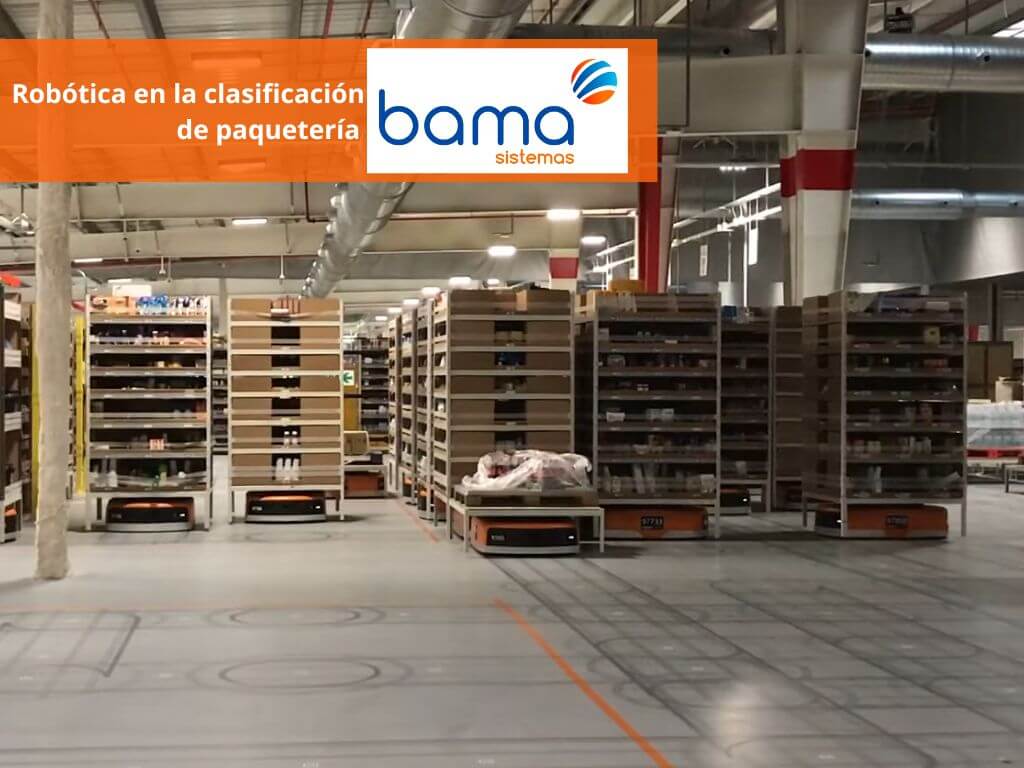
The logistics revolution has begun. In a world increasingly interconnected by e-commerce, speed and logistics efficiency have become decisive factors for the success of any company. In this context, robotics in parcel sorting is emerging as a technological solution that is radically transforming warehouses. So-called “smart warehouses”, equipped with advanced robotics systems and artificial intelligence (AI), are redefining the future of distribution.
This article will take you into the exciting world of logistics automation, explaining in detail how robotics in parcel sorting is revolutionizing the way millions of orders are managed every day worldwide.
What is a smart warehouse?
A smart warehouse is a logistics facility that incorporates cutting-edge technologies to automate key tasks such as parcel sorting, internal transport, inventory management, and quality control. Through robotic systems, high-precision sensors, and predictive algorithms, these spaces optimize every step of the logistics flow to the fullest.
One of the most innovative components of these warehouses is autonomous mobile robotics. These robots not only replace repetitive manual work, but also improve overall performance, enabling much faster and more accurate parcel sorting.
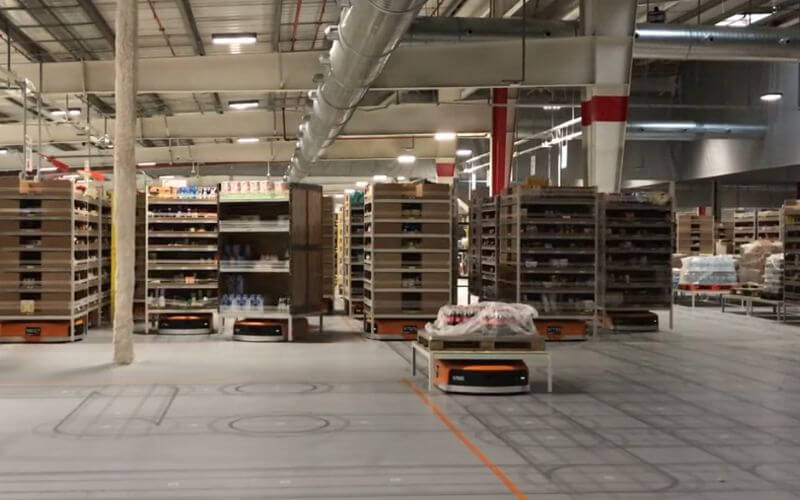
Autonomous mobile robotics: the heart of the system
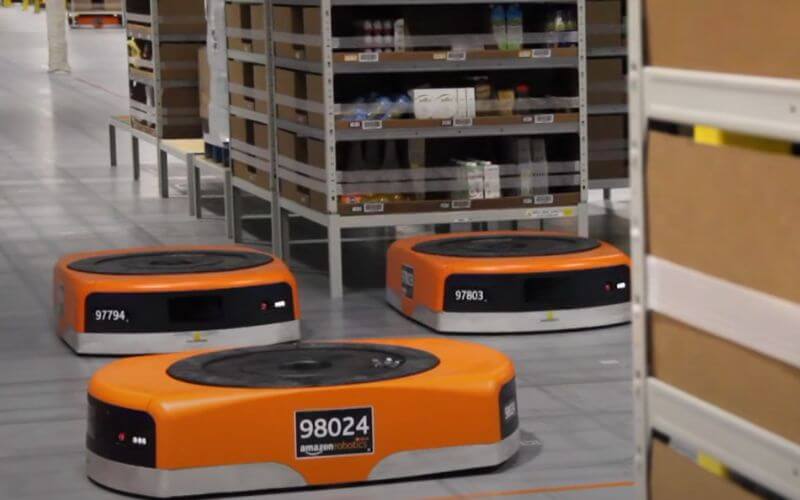
Robots that do not rest: the autonomous robots operating in these logistics centers have a robust, functional design. They resemble large industrial vacuum cleaners and can lift entire shelving units without the need for direct human intervention.
Load capacity:
Each robotic unit can handle shelving units up to two meters high, loaded with products of different weights and volumes.
Precise navigation:
Thanks to their sensor-based navigation technology using LIDAR sensors and constant communication with the central system, they move through ultra-compact spaces without collisions, making it possible to maximize warehouse capacity.
Restricted zones:
These machines operate in dedicated areas, physically separated from employees, to reduce risks and improve the efficiency of parcel sorting.
Integrating robotics into parcel sorting also requires safety measures for workers. Smart vests with sensors allow robots to detect human presence and respond accordingly, stopping or changing route to prevent accidents.
Parcel sorting: millimeter-level precision
Parcel sorting is one of the critical functions within the logistics flow. Thanks to robotics, this process has gone from being a manual, error-prone task to an automated operation with millimeter-level precision.
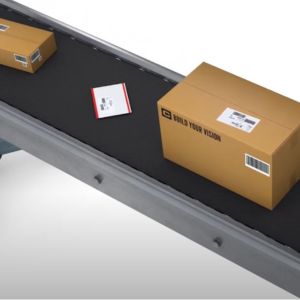
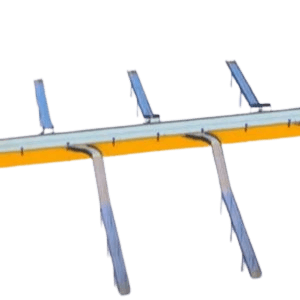
Robotics in parcel sorting makes it possible to scan, weigh, measure, and redirect each parcel in seconds, ensuring it reaches the correct destination without delays or mistakes. These systems work together with smart conveyor belts and robotic arms that organize shipments (automated sorter) according to criteria such as destination, urgency, or product type.
The role of artificial intelligence in parcel sorting
Artificial intelligence is the brain that orchestrates this entire automated operation. Its algorithms make it possible to anticipate demand, optimize storage, and plan efficient routes within the warehouse. In addition, it analyzes real-time data to:
- Identify consumption patterns.
- Adjust product placement.
- Prioritize parcels based on delivery schedules and routes.
Thanks to this synergy between AI and robotics, some logistics centers are able to process hundreds of thousands of parcels daily, minimizing errors and improving delivery times.
Key benefits of robotics in parcel sorting
The application of robotics in parcel sorting not only represents a technological leap, but also a crucial competitive advantage for logistics companies. Automating this key process makes it possible to improve multiple operational aspects of the warehouse, from space utilization to service continuity and the accuracy of handling each parcel. Below are the main benefits this technology brings to the modern logistics ecosystem:
Space savings:
The absence of traditional aisles allows for much greater use of space. Some warehouses manage to store up to 50% more products in the same physical space.
Error reduction:
Errors in parcel sorting are drastically reduced thanks to automated verification systems. This results in a more satisfactory customer experience and lower operating costs.
Continuous productivity:
Robotics makes it possible to keep operations running 24 hours a day, 7 days a week. Unlike human labor, there are no breaks or interruptions, which improves responsiveness to demand peaks.
The future of robotics in parcel sorting
Forecasts point to an even higher level of automation in the coming years. Robotics in parcel sorting will continue to evolve to include:
- Machine vision systems for quality control.
- Indoor drones for inventory management.
- Automatic replenishment using collaborative robots.
While these advances could raise concerns about employment, the reality is that human oversight will remain essential. Operators will continue to perform critical functions such as system maintenance, robot programming, and resolving unforeseen incidents.
Robotics in parcel sorting is redefining the modern logistics landscape. Smart warehouses represent a perfect fusion of technology and operational efficiency. This transformation not only improves delivery times, but also increases accuracy, safety, and sustainability across the logistics process.
In an increasingly automated future, robotics in parcel sorting will become a key element in the global supply chain. So, the next time you receive a parcel quickly, remember that there is a sophisticated ecosystem of robots working tirelessly to make it possible.
We hope you found this article of interest.
If you require additional information to implement a parcel sorting system with robots, please do not hesitate to contact us.