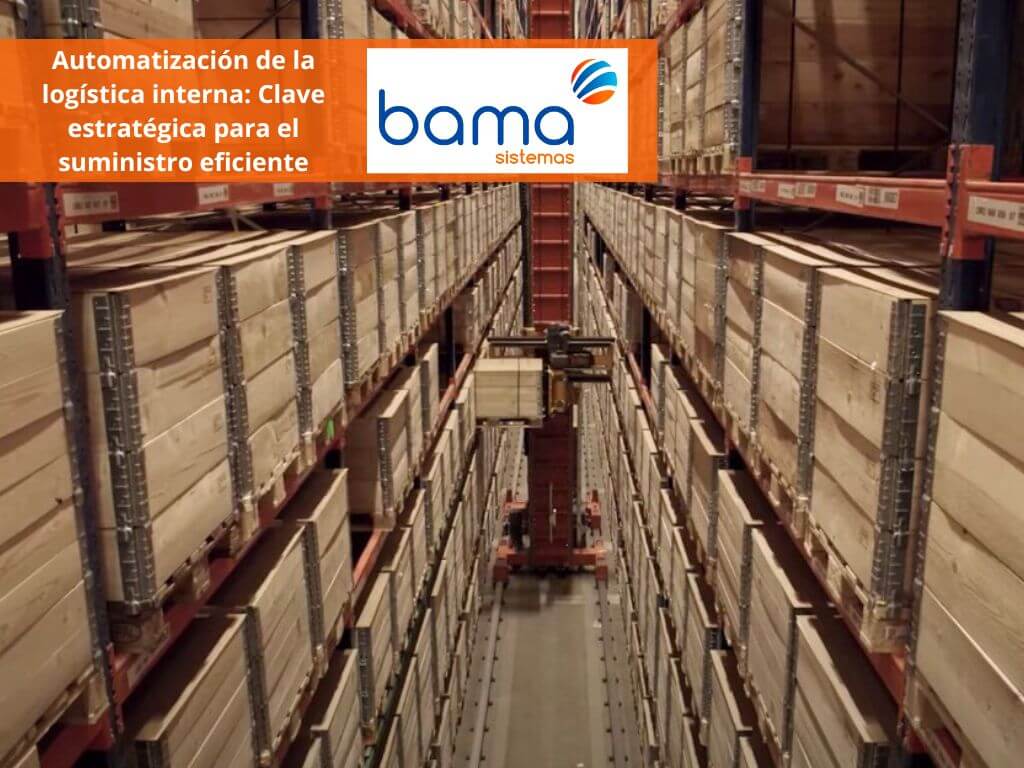
Internal logistics automation has become a strategic tool for companies looking to improve operational efficiency, reduce errors, and respond swiftly to market demands. Gone are the days when internal processes—such as warehouse management or moving goods within the facility—were carried out manually or with minimal technological support. Today, competitiveness depends on integrating smart technologies and autonomous systems within the logistics centre itself.
This article takes an in-depth look at what internal logistics automation is, which technologies make it possible, the advantages it offers, and the challenges it entails—especially for logistics managers, operations managers, and plant managers.
What do we mean by internal logistics automation?
Internal logistics automation involves incorporating technological solutions to carry out, automatically or semi-automatically, tasks such as:
- Product dispatch and shipping
- Receiving and unloading goods
- Storage and racking organisation
- Order preparation (picking and packing)
- Internal movements (between warehouse or production areas)
Different levels of automation can be distinguished:
- Assisted automation: relies on technological tools to facilitate manual tasks (for example, handheld terminals, voice picking).
- Partial automation: combines automated processes with human intervention (for example, conveyor belts with manual validation).
- Full automation: uses autonomous systems that operate independently (for example, mobile robots, stacker cranes, WMS systems connected to AI).
Key technologies in internal automation
To automate internal logistics effectively, it is useful to understand the main technologies involved:
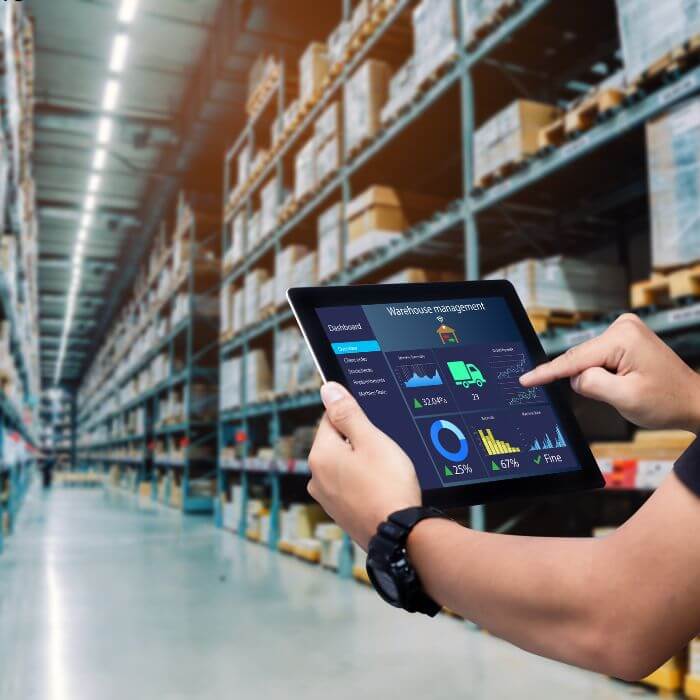
Warehouse management systems (WMS)
A WMS (Warehouse Management System) makes it possible to control and optimise warehouse operations. Its most notable functions include:
- Real-time location and inventory control.
- Task prioritisation based on business rules (FIFO, LIFO, FEFO).
- Integration with ERP, robots, and picking systems.
Main advantage: it reduces human error and improves traceability.
Robots and autonomous vehicles
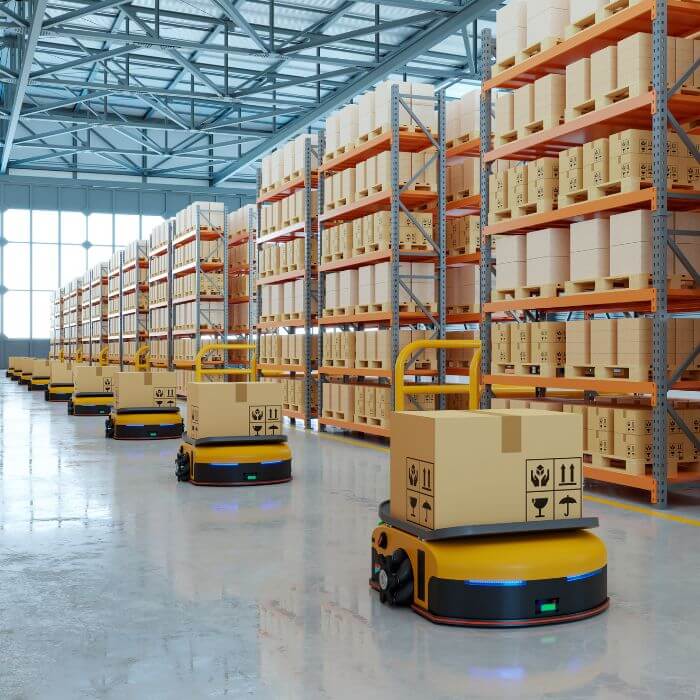
There are several types of robots used in logistics:
- AGVs (Automated Guided Vehicles): follow fixed routes using magnets or lasers.
- AMRs (Autonomous Mobile Robots): adapt to the environment in real time; more flexible.
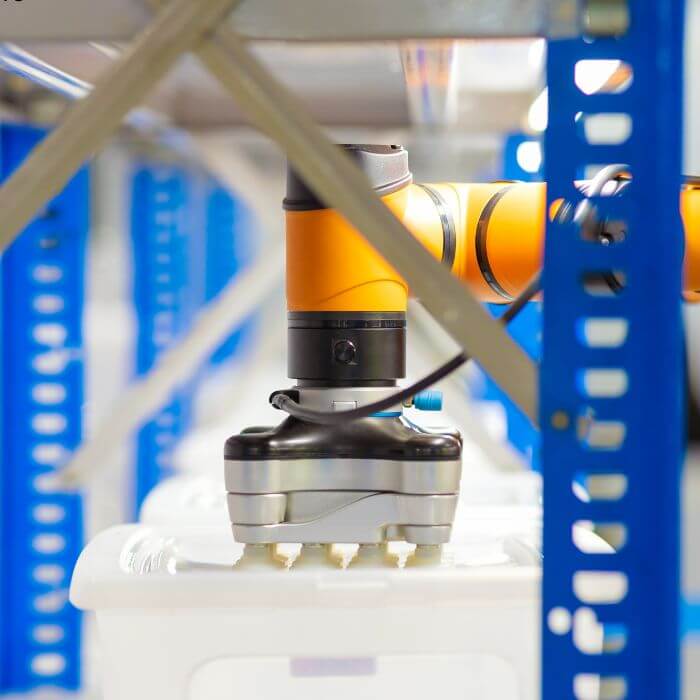
- Cobots: work alongside humans on repetitive tasks (loading, packing).
- Drones: ideal for inventory counts or deliveries in densely populated urban areas.
Artificial intelligence and machine learning
AI has transformed logistics with capabilities such as:
- Demand forecasting based on historical patterns and external events.
- Real-time optimisation of delivery routes.
- Automated quality control using machine vision.
Key fact: according to McKinsey, companies that apply AI in logistics can reduce operating costs by 20–30%.
Benefits of automating internal logistics
The benefits of automating logistics processes go beyond cost savings. They include operational efficiency, fewer errors, and greater adaptability to a changing environment.
Reduction of operating costs
Logistics automation reduces the need for labour in repetitive tasks, decreases inventory errors, and optimises the use of warehouse space.
Greater accuracy and fewer errors
Technology reduces inaccuracies in picking and inventory counting. This improves customer satisfaction and reduces returns.
Agility and scalability
Automated systems can quickly adapt to demand peaks without the need to hire and train new staff.
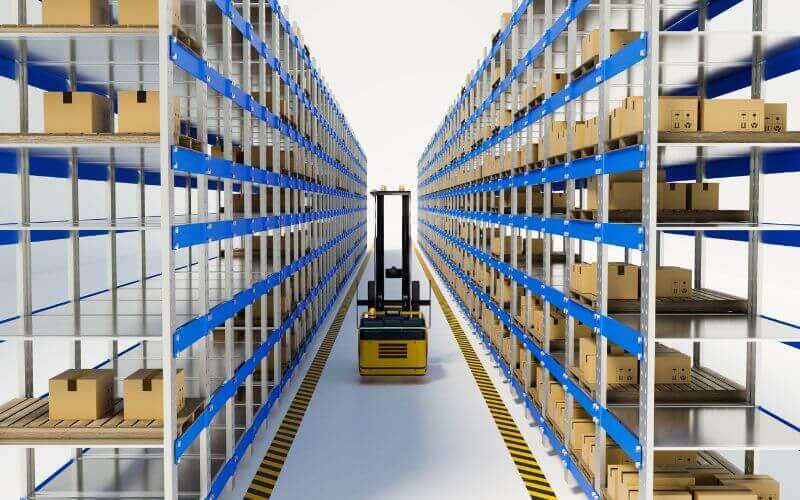
Automation in storage
Automated systems such as stacker cranes enable products to be stored and retrieved efficiently in vertical racking.
Challenges of automation in internal logistics
Despite its many advantages, logistics automation presents significant barriers that must be considered from the start of the transformation process.
High initial investment
The acquisition and implementation of automated systems may require a considerable investment, especially for SMEs.
Technological challenges
Integrating different systems (ERP, WMS, robots, AI) requires a robust architecture and qualified personnel.
Dependence on technology
Automation increases reliance on digital systems. A software or hardware failure can bring the entire operation to a standstill.
The future of automated internal logistics
Technological evolution does not stop, and logistics automation will become increasingly intelligent, sustainable, and customer-centric.
Development of new technologies
Greater adoption is expected of:
- Collaborative robots with advanced AI.
- 5G logistics with ultra-low latency.
- 3D printing in warehouses to reduce physical inventory.
Sustainability and efficiency
Logistics automation enables more efficient routes, less waste, and more rational use of resources, contributing to sustainability goals.
Logistics automation is no longer a futuristic option, but a present-day necessity to compete in a globalised and demanding market. Companies that choose to integrate these technologies will gain not only efficiency, but also resilience and adaptability.
The path to fully automated logistics involves investment, training, and cultural transformation. However, the return—both in profitability and strategic positioning—is undeniable. The logistics of the future is already here, and those who embrace it today will lead the market tomorrow.
We hope you found this article of interest.
If you are considering implementing automated solutions in your company, our team can help you take the next step.