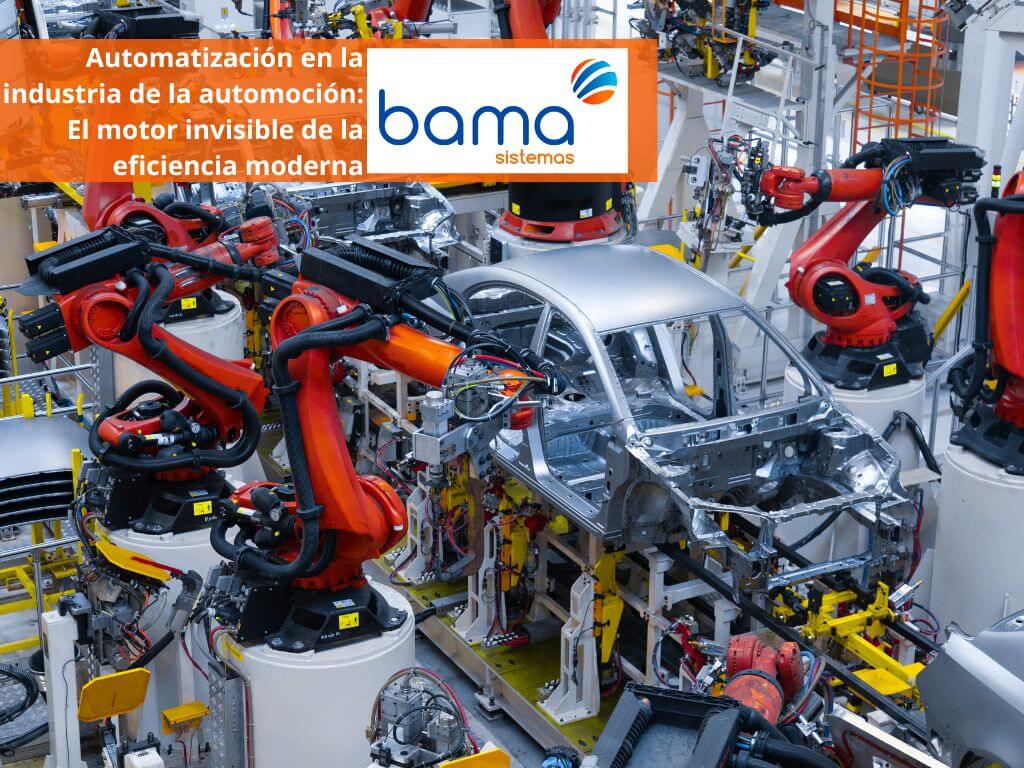
The automation in the automotive industry has become a key strategy for increasing efficiency, improving quality, and ensuring the sustainability of production processes. Companies like Ford, pioneers in technological integration, have completely transformed their plants through a robotic symphony that redefines vehicle manufacturing standards.
The Automotive Assembly Revolution
The automotive assembly process consists of four fundamental phases: stamping, body shop, painting, and final assembly. The most critical stages, body shop and final assembly, demand extreme precision that only automated systems can continuously and scalably guarantee.
Key Benefits of Automotive Industry Automation
The integration of robotic and digital solutions has enabled:
- Improving the quality of the final product, minimizing human errors.
- Significantly increasing operational efficiency, thanks to 24/7 continuous operation capabilities.
- Reducing operational costs, by minimizing rework and optimizing resources.
- Increasing workplace safety, by automating repetitive and dangerous tasks.
Ford Dearborn Case: Robotic Symphony in Action
At its Dearborn (Detroit) plant, Ford carried out one of the sector’s most ambitious transformations. It reconfigured its production line to assemble aluminum bodies, dismantling 93,000 m² of workshop space in just 72 hours. The result? An infrastructure where over 1.5 km of conveyor lines synchronize robots capable of assembling 330,000 units per year.
Human-Machine Integration
Far from replacing operators, automation has enhanced collaboration. The transition from steel to aluminum, for example, allowed the number of specialists to multiply from 97 to 270 operators. While robots execute critical tasks, human workers supervise, configure, and optimize the systems.
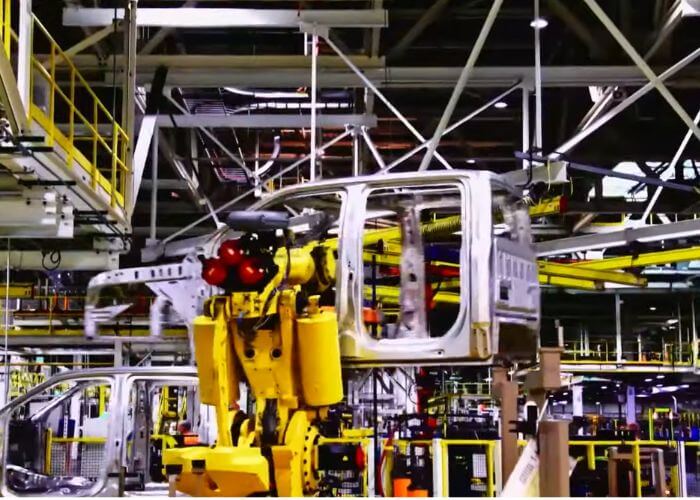
Cobots: The Operator’s New Ally
Collaborative robots (cobots) represent one of the most significant innovations. Designed to work hand-in-hand with humans, they are equipped with collision sensors and artificial vision systems that eliminate the need for physical barriers.
Cobot Applications in Automotive:
- Precise part positioning
- Repetitive high-precision screwing
- Handling delicate components
- Reduction of occupational risks
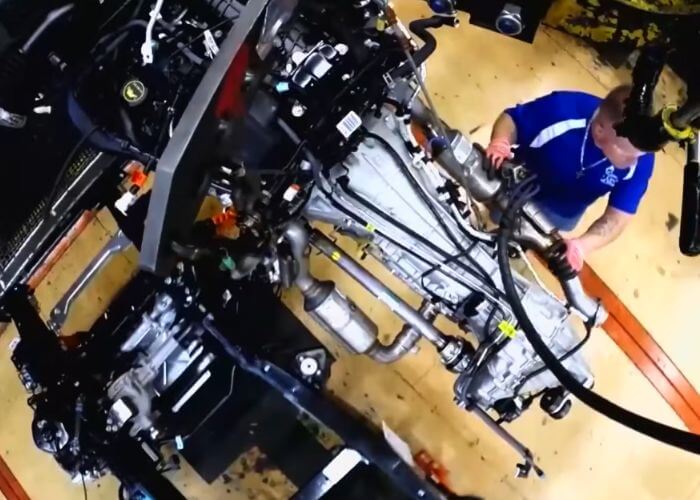
Automated Quality Verification
A vital aspect of automation in the automotive industry is quality assurance. Through photoelectric sensors and automatic inspection systems, it is possible to detect defects, align components, and verify assemblies without error.
What Advantages Does Automation Bring to the Automotive Industry?
Automation not only transforms productivity; it also introduces key benefits in the planning, simulation, and sustainability of industrial operations.
Increased Efficiency and Productivity
- 24/7 Uninterrupted Operation
- Reduced Downtime
- Greater Production Capacity
Long-term cost reduction
- Less reliance on manual labor for repetitive tasks
- Savings in labor costs and errors
Improved Quality and Consistency
- Precision in welding, painting, and assembly
- Uniformity in final product finishes
Workplace Safety
- Accident reduction through automation of dangerous tasks
- Safer working environments
Production Flexibility
- Reprogrammable systems that allow adaptation to new models or customizations.
- Agile response capability to market trends and demand variations.
Environmental Sustainability
- Optimization of materials and energy
- Waste reduction and lower carbon footprint
Data-Driven Decision Making
- Sensors and predictive analytics that improve maintenance and planning.
- Early fault detection and continuous optimization.
Global Competitiveness
- Faster and more economical production to compete in international markets.
- Accelerated launch of new vehicles to market.
Creation of Specialized Employment
- Creation of technical profiles in robotics, programming, and system supervision.
- Training opportunities for workers in advanced skills.
Global Trend and Competitiveness
More than 70% of manufacturers in the automotive sector have already adopted automation solutions. This trend responds not only to the need to reduce costs but also to the growing demand for personalized, safe, and sustainable vehicles.
A Strategic Decision for the Industrial Future
Automation in the automotive industry is not an option, but a strategic decision for those who wish to remain competitive.
At Bama Sistemas, we accompany our clients at every stage of the process, designing solutions that transform traditional factories into high-performance production ecosystems.
We hope you found this article of interest.
If you need any additional information to implement automation using robots, please do not hesitate to contact us.