
To understand what industrial robotics is, we must first explore its origins, its contribution to industry, and attempt to determine what its future will be.
No one can deny that industrial robotics has played a fundamental role in the transformation of modern industry. As we advance toward an era of technology and automation, industrial robots have become indispensable allies for optimizing production processes and improving business efficiency.
Let us explore the history of industrial robots, their impact on industry, and how they are changing the way we work.
Origins of Industrial Robotics
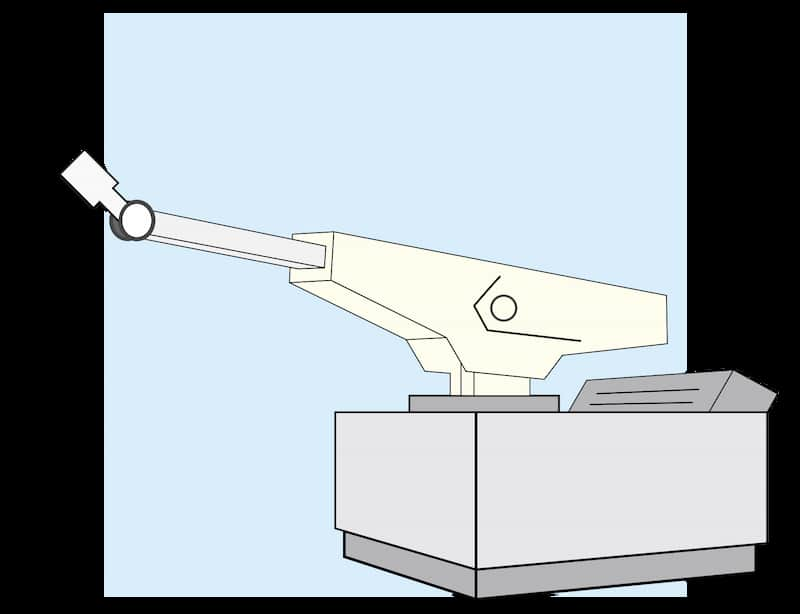
The history of industrial robots dates back to the mid-20th century, when engineer George Devol invented the first programmable robot known as “Unimate“.
This simple robot was installed on one of General Motors’ assembly lines. Its mission was to feed the line with cast parts, which it extracted from molds. The purpose was to prevent workers from coming into contact with foundry fumes, high temperatures, and potential accidents.
This robot, developed based on a patent owned by George Devol, gave rise to the first industrial robot manufacturing company: Unimation.
This milestone marked the beginning of a new era for industry, as robots began to play a key role in the automation of repetitive and dangerous tasks.
Industrial Robotics Today
Today, industrial robotics has evolved significantly. Robots are not only capable of performing simple and routine tasks, but can also carry out more complex processes and adapt to different work environments. This versatility has opened new possibilities in sectors such as manufacturing, logistics, and healthcare, among others.
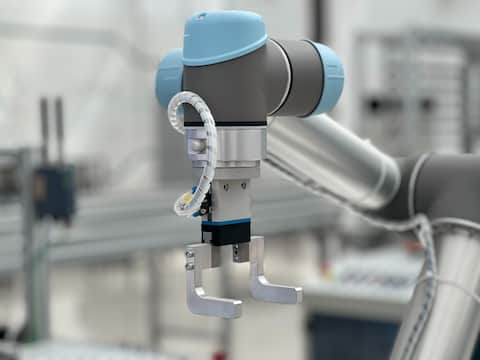
Recently, with the emergence of cobots or collaborative robots, it has become possible to combine the work of people with that of robots. Unlike traditional industrial robots, which often require safety barriers to prevent worker injuries, cobots are designed to be intrinsically safe and can operate in shared spaces without the need for physical separations. This allows greater flexibility in task automation, as cobots can perform repetitive or dangerous work alongside humans, freeing the latter to perform more creative, complex tasks or those requiring human judgment. Additionally, cobots are typically easier to program and reconfigure, making them ideal for manufacturing and assembly environments that require rapid adaptation to changes in production or market demands.
The Future of Industrial Robotics
As technology advances, we can expect an exciting future for industrial robotics. The integration of artificial intelligence and machine learning into robots will enable greater autonomy and adaptability to different situations. This will open the door to a new generation of intelligent robots capable of collaborating closely with humans in shared work environments.
It is also estimated that, thanks to AI applied to robotics, robots capable of performing operations in hostile environments will be available, without the need for human intervention and making decisions more rapidly.
Benefits of Industrial Robotics
The implementation of industrial robotics brings a series of benefits for companies. Among the most notable are:
- Improved productivity: By working without rest and with constant precision, industrial robots can significantly increase productivity compared to human labor, leading to greater production in less time.
- Efficient automation of repetitive tasks: Industrial robots can perform repetitive tasks continuously and precisely, increasing efficiency and reducing human errors.
- Production flexibility: Industrial robots can be easily reprogrammed and reconfigured to adapt to different tasks or changes in production requirements, allowing greater flexibility on the production line.
- Reduction of labor costs: In the long term, implementing industrial robots can reduce labor costs by decreasing the need for human labor in repetitive tasks and allowing workers to focus on higher value-added tasks.
- Improved product quality: The precision and consistency of industrial robots contribute to higher product quality by reducing defects and variations in the manufacturing process.
- Workplace safety: By taking on dangerous or ergonomically challenging tasks, industrial robots can improve workplace safety by reducing workers’ exposure to occupational hazards.
- Data monitoring and analysis: Industrial robots can be equipped with sensors and monitoring systems that collect real-time data on manufacturing process performance, enabling detailed analysis to identify areas for improvement and optimization.
- Market competitiveness: The implementation of industrial robotics can improve a company’s competitiveness by increasing efficiency, reducing costs, and improving product quality, allowing it to keep pace with competitors in a globalized and constantly changing market.
We hope you found this article of interest.
If you need any additional information to implement automation using robots, please do not hesitate to contact us.