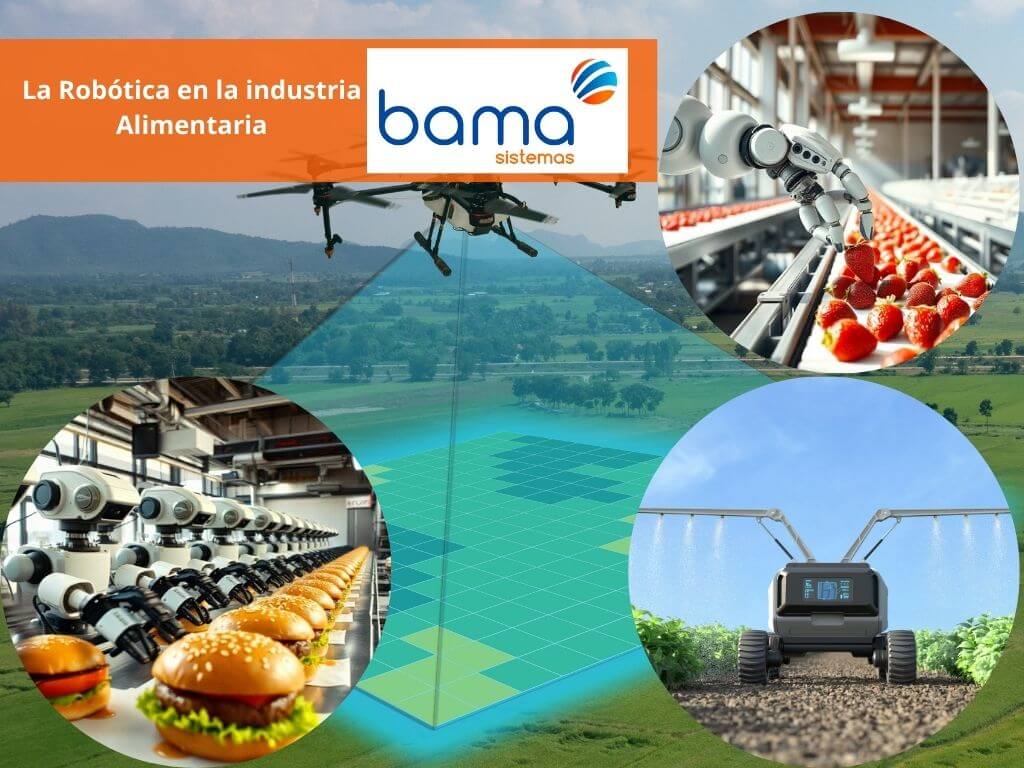
The Robotics Revolution in the Food Industry is undergoing an unprecedented transformation thanks to the integration of robotic technologies. From fields with robotics in agriculture to consumers’ tables, robots are optimizing processes, ensuring quality standards, and redefining what it means to produce and prepare food. In a world where the demand for efficiency and food safety is growing exponentially, automation has become a strategic ally.
Robotics in Precision Agriculture
Automation in agriculture is no longer science fiction. Today, robots equipped with artificial intelligence (AI) and advanced sensors are revolutionizing how we plant, care for, and harvest what we eat.
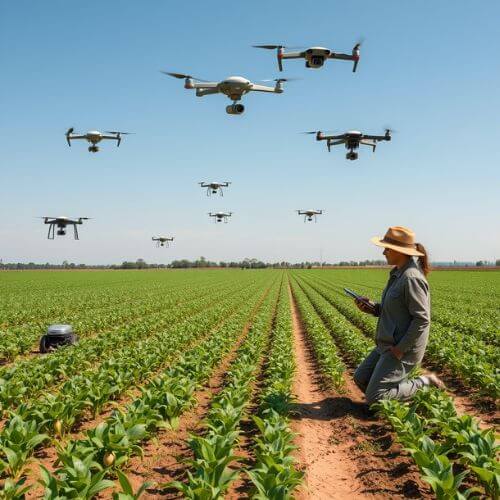
Autonomous Tractors and Drones
The new workforce, such as autonomous tractors from John Deere, is a prime example. With GPS navigation systems and environmental sensors, these machines perform tasks like planting, fertilizing, and harvesting without human intervention. Their precision reduces input waste and maximizes yield per hectare.
Complementing this equipment are drones like the DJI Agras, which operate as intelligent aerial sprayers. Capable of carrying up to 16 liters of pesticides or fertilizers, they analyze crops in real-time to apply resources only where needed, minimizing environmental impact.
Ground Robots
Companies like FarmWise have developed ground robots that use AI and computer vision to diagnose plant health. These devices dispense water, nutrients, or pesticides individually, adapting to the specific needs of each crop, ensuring personalized care for each plant. This approach not only improves productivity but also reduces chemical use by up to 90%.
Robotics in Food Processing: More Speed, Hygiene, and Uniformity
In processing plants, robots have replaced repetitive and dangerous tasks, ensuring hygiene and consistency standards impossible to achieve manually.
Robotic Sorting and Smart Cutting Systems
The Omron robot uses computer vision to sort peppers by size, color, and shape, organizing them into specific patterns before packaging. Meanwhile, systems like Flexicut use X-rays and high-pressure water jets to process fish fillets: they identify bones, calculate optimal cuts, and separate valuable parts in seconds with millimeter precision.

Automated Packaging: Increased Speed and Protection
Robotics has transformed packaging with machines capable of handling fragile products without damage. From dairy to snacks, robots ensure that food reaches consumers intact, while recording batch and expiration data to improve traceability.

Robotics in the Kitchen and Service
While cooking remains an art dominated by humans, robots are gaining ground in restaurants and industrial kitchens, especially for tasks requiring speed and repeatability.
Flippy and the Burger Revolution
Flippy, developed by Miso Robotics, is a robotic arm that cooks burgers in fast-food chains. Equipped with thermal sensors and artificial vision, it monitors cooking levels, flips patties, and removes them just in time. Its implementation reduces waiting times and occupational accident risks.
Human-Robot Collaboration in Action
- Increased productivity: Robots don’t sleep, don’t get fatigued, and don’t require breaks. In processing plants, for example, automated lines can operate 24 hours a day, increasing production by up to 30-50% compared to traditional methods. This is critical in seasonal sectors, such as fruit harvesting or the Christmas demand for packaged foods. Furthermore, robotic precision eliminates bottlenecks: tasks like meat cutting or container filling are performed at speeds of up to 200 units per minute, something impossible for human workers. Companies like Tyson Foods have reported 20% efficiency increases after implementing robotic arms on their deboning lines.
- Waste reduction: Efficient use of resources and minimization of errors.
- Food safety: Human intervention is one of the main vectors of food contamination. Robots, operating in controlled environments and with strict protocols, reduce this risk. For example, in dairy plants, robotic arms seal containers in sterilized chambers, eliminating exposure to pathogens like Salmonella or E. coli.
- Mass customization: The demand for personalized products (vegan, low-sodium, allergen-free, etc.) is booming, and robots are the answer. This flexibility also benefits retailers: chains like Starbucks use automated systems to offer unique drink combinations without slowing down service.
The benefits of automation extend beyond financial metrics:
- Scalability: Allows production expansion without increasing fixed costs.
- Adaptability: Reprogrammable robots adjust their operation for new products in hours, not months.
- Talent attraction: Integrating cutting-edge technology enhances brand image and attracts specialized professionals.
In a market where 62% of consumers demand transparency and quality (Deloitte, 2023), robotics is not just an operational tool, but a key differentiator for building trust and loyalty.
Challenges and Ethical Considerations: Balancing Innovation and Responsibility
The integration of robots in the food industry is not without its complexities. Beyond the benefits, it is crucial to address ethical and technical dilemmas that demand innovative solutions and clear policies. Here we delve into the most relevant challenges:
Labor Impact: Threat or Opportunity for the Workforce?
The fear that robots will eliminate jobs is common, but the reality is more complex. Studies suggest that, in the next decade, a significant percentage of tasks in food manufacturing could be automated. However, this does not mean the disappearance of jobs, but an evolution in labor roles:
- New opportunities: Specialized jobs are emerging in areas such as robot maintenance, artificial intelligence programming, and data analysis. In some countries, training programs are transforming line operators into highly skilled technicians with competitive salaries.
- Strategic reallocation: Leading companies are reallocating their personnel to roles where creativity and human judgment are key, such as quality control, product development, or customer service.
- Skills gap: The biggest challenge lies in preparing the current workforce. Initiatives such as robotics training centers are helping agricultural and plant workers master emerging technologies, such as drones and collaborative robots.
Even so, sectors with a high dependence on unskilled labor, such as packaging or harvesting, face risks. The key lies in public and corporate policies that foster a just transition, combining training subsidies and collaboration between governments and companies.
Sustainability: The Dilemma Between Efficiency and Environmental Footprint
The manufacturing and operation of robots have an initial environmental impact, but their efficiency can offset it over time:
- Resource consumption: Producing an industrial robot requires materials such as metals and plastics, but innovations in modular design and recyclable materials are reducing this impact.
- Energy efficiency: Modern robots consume less energy than traditional systems, thanks to technologies like regenerative motors that recover energy during operation.
- Environmental compensation: Studies indicate that, in processing plants, automation can reduce water waste by more than 50% and CO₂ emissions by 20%, balancing their ecological footprint in a few years.
To maximize sustainability, the industry must prioritize:
- Circular economy: Recycling components and using biodegradable materials.
- Clean energy: Powering automated plants with renewable sources, such as solar or wind.
Ethics in the Supply Chain: Robots and Global Equity
Automation could widen economic gaps between countries:
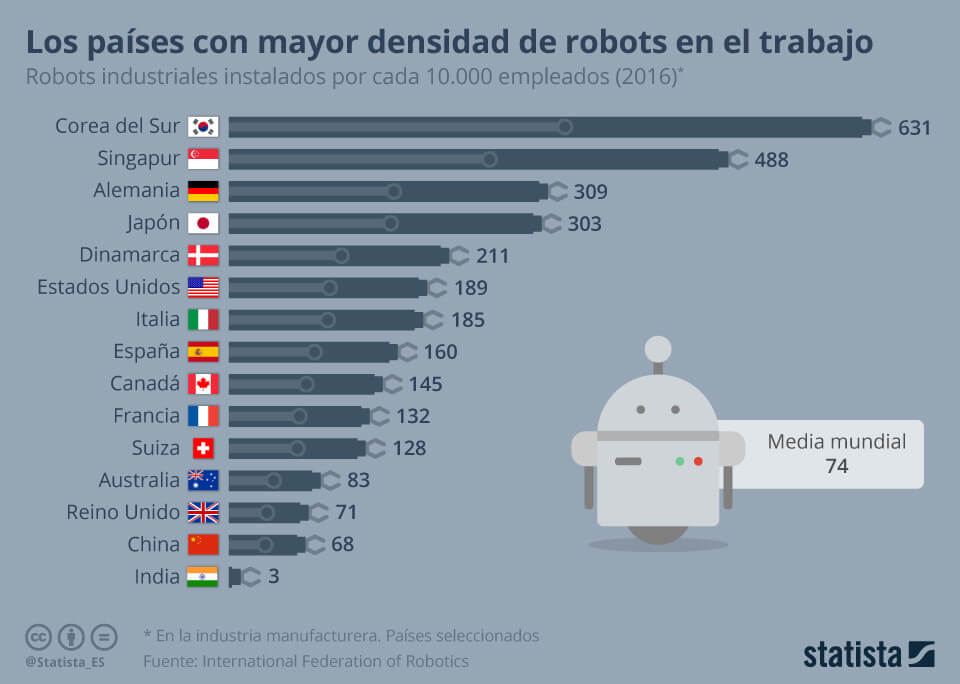
- Technological concentration: 75% of industrial robots are in the US, China, Japan, and Germany (IFR, 2023). This leaves regions like Africa or Latin America at a disadvantage, without access to automation investment.
- Supplier dependence: Small companies could get trapped in costly robotic software licenses, limiting their competitiveness.
Emerging solutions include “robotics as a service” (RaaS) models, where SMEs rent robots by the hour, and technological cooperatives that share open patents to democratize access.
Towards an Ethical Model: Collaboration, Not Substitution
The future demands a balanced approach:
- Transparency: Clearly communicate how and where robots are used.
- Proactive regulation: Governments must legislate on job retraining, robot recycling, and data protection.
- Responsible innovation: Invest in technologies that prioritize social and environmental benefits, not just profits.
As the UN points out in its report “Robotics for Sustainable Development”, automation is not an end, but a tool for building fairer and more resilient food systems.
The Future of Robotics in the Food Industry
Emerging trends promise an even smarter industry:
- Robots with artificial senses: Systems that “smell” or “taste” food to adjust recipes.
- Autonomous vertical farms: Robotic greenhouses in cities to shorten supply chains.
- Blockchain + Robots: Real-time traceability, from farm to supermarket.
Automation as a Strategic Ally
Industrial automation with robotics is not a replacement for human labor, but a strategic ally that enhances the capabilities of the food sector. By integrating advanced technologies, companies optimize critical processes: from planting to packaging, achieving unprecedented operational efficiency. Robots not only reduce costs and errors but also enable scalability, allowing production to increase without sacrificing quality.
Furthermore, their adaptability to changes in demand or regulations ensures an agile response in dynamic markets. Beyond economic gains, automation is consolidated as a pillar for overcoming global challenges, such as food security and sustainability. By adopting it, companies not only position themselves as innovative leaders but also build a more resilient food ecosystem, capable of feeding a growing population while minimizing its environmental footprint. In a world where competitiveness demands agility and precision, automation is no longer an option, but an indispensable strategic advantage.
We hope you found this article of interest.
If you need any additional information to implement automation using robots, please do not hesitate to contact us.
Frequently Asked Questions about Robotics in the Food Industry
1. What aspects should be considered before implementing robotics for physically sensitive foods?
For fragile products such as fruits, snacks, or dairy, it is essential to choose robots with soft gripping systems and precise calibration capabilities, as well as incorporating vision technologies that allow handling without breaking or deforming the product.
2. How does robotics contribute to ensuring hygiene in the food industry?
Automated robots reduce human contact in delicate phases such as cutting or packaging, which decreases contamination risks. Additionally, robot materials can be designed to withstand frequent cleaning with sanitary products.
3. What advantages does artificial vision offer in food processing?
Artificial vision allows food to be sorted by size, color, or shape quickly and accurately, and also facilitates traceability by recording batch or expiration data during automated packaging.
4. Is it feasible to incorporate robots like Flippy into an industrial kitchen without renovating the entire plant?
Yes. Robots like Flippy can be integrated with a modular design, adapting to existing kitchen lines through specific cooking or handling stations, avoiding major structural renovations.
5. Can robotics increase production in seasonal periods like fruit harvesting?
Yes. Robotic automation allows for 24/7 operation without fatigue, which increases productive capacity by 30% to 50% during periods of high demand, such as harvests or holiday seasons.
6. What additional benefits does robotization offer in packaging products like snacks or dairy?
In addition to protecting delicate products, packaging robots incorporate systems that automatically record batch and expiration dates, which enhances traceability and streamlines quality controls.
7. How can Bama Sistemas support the implementation of robotics in the food industry?
At Bama Sistemas, we develop customized solutions to automate processes such as robotic sorting, cutting, packaging, or cooking. We handle technical design, system integration, and programming, ensuring efficient implementation without operational interruptions.