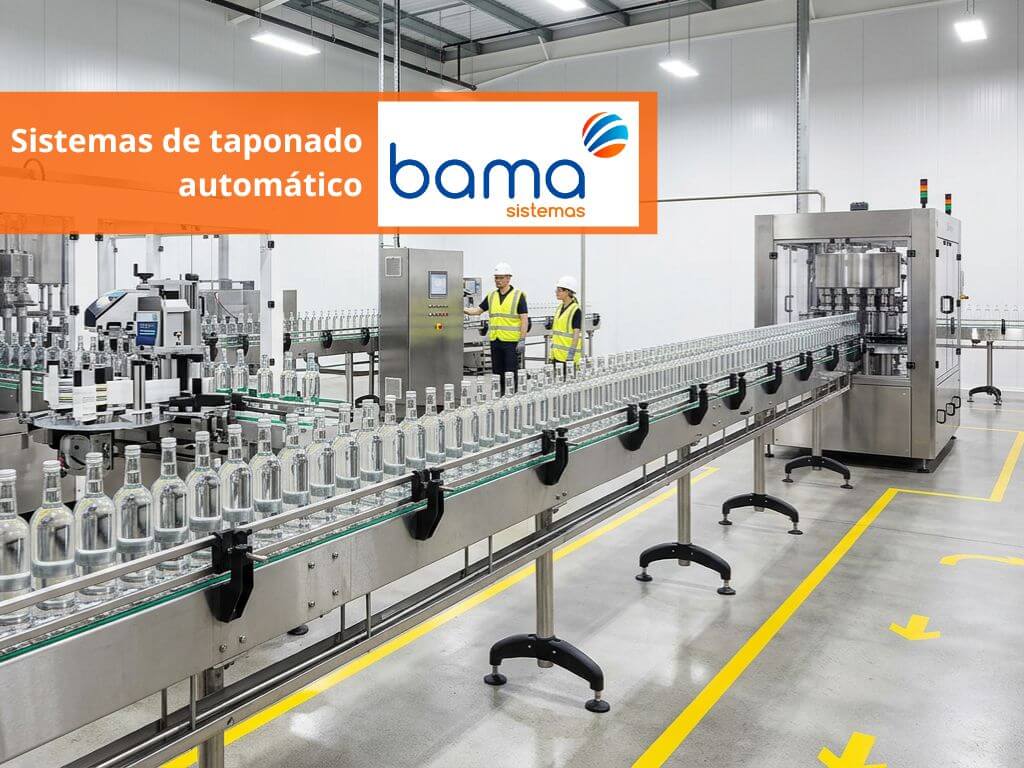
Automatic capping machines have become a critical component within any modern packaging line. Beyond simply placing a cap, the capping process guarantees product integrity, protects brand value, and ensures compliance with industrial regulations such as GMP or ISO 22000.
For sectors such as food, beverages, pharmaceuticals, or cosmetics, the correct sealing of the container is a critical control point within the production process. Therefore, understanding how an automatic capping machine works, what technologies exist, and how to correctly integrate it into a production line is key to making a sound investment decision.
What automatic capping machines are and why they are critical in a packaging line
Automatic capping machines are industrial equipment designed to place and secure caps, capsules, or closures onto containers continuously and with constant precision. This process is carried out without direct manual intervention, which allows for high production rates and reduces closure variability.
Their importance goes far beyond speed. According to PMMI data, 30% of production downtime originates from packaging equipment failures. An incorrectly sized capper or one with torque variability not only generates waste: it compromises evidence of tampering, the chemical integrity of the product and, in sectors such as pharmaceuticals or food, can lead to product recalls with irreparable reputational costs.
Furthermore, when capping is correctly automated, several common problems of manual processes are eliminated:
- Variability in tightening torque
- Misalignments or cross-threading
- Reduced productivity due to operator fatigue
- Increased product exposure to the environment
In modern industrial systems, an automated line can easily exceed 60,000 bottles per hour depending on the type of architecture used.
Types of automatic capping machines: which one does your process need?
Choosing correctly among the types of automatic capping machines available is the most important technical decision before any investment. Each architecture responds to a specific type of container, speed, and sector.
Spindle capper
This is the most widespread solution in medium and high-speed linear lines. The container advances continuously while several sets of rotating wheels apply torque progressively. Ideal for plastic screw caps in the food, beverage, and chemical sectors. Its main advantage is speed and ease of maintenance.
Chuck capper
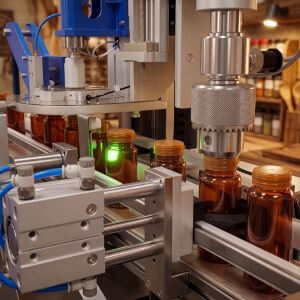
This system uses a head that grips the cap and applies a precise tightening torque using clutches or servomotors. Its main advantage is the repeatability of the applied torque. It guarantees maximum repeatability and eliminates the risk of cross-threading, being essential when regulatory compliance is non-negotiable.
ROPP (Roll-On Pilfer-Proof) capper
The ROPP system is designed to deform aluminum caps over glass containers. During the process, the airtight seal and the tamper-evident security ring are created simultaneously.
This system is widely used in:
- Pharmaceutical products in glass
- Wine industry
- Beers
- Olive oil
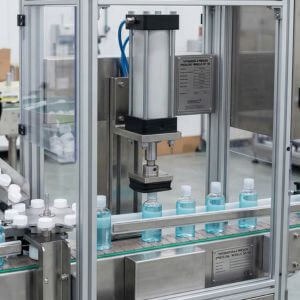
Press-on capper
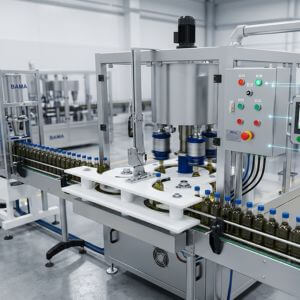
Press-on cappers are designed for snap-on closures or caps that do not require threading. They use mechanical or pneumatic force to fit the cap onto the container.
They are common in consumer goods and laboratory applications.
Inline capping systems and their integration into production
The end-of-line capping systems are part of a larger assembly within the packaging line. For the process to be efficient, the capping system must be correctly integrated with the filling, transport, and quality control equipment.
A complete system usually includes three main subsystems.
Cap feeding and orientation
Caps must be fed continuously and correctly oriented before being placed on the container. For this, technologies such as the following are used:
- Vibratory bowls
- Centrifugal feeders
- Waterfall elevators
Each technology is selected based on the geometry of the cap and the required production speed.
Cap placement systems
Once the cap is oriented, the system must place it correctly on the container before applying the closure.
The most common methods are:
- Pick-off system
- Pick-and-place system
The former is ideal for high-speed lines, while the latter offers greater precision for delicate formats.
Torque control and quality control
Modern lines integrate sensors that monitor the torque applied to each closure. Additionally, machine vision systems allow for the detection of defects and trigger automatic rejections without stopping production.
This ensures a quality control level close to 100% compliance.
Automation of the capping process and its impact on efficiency
The automation of the capping process not only increases production speed but also transforms the overall efficiency of the line.
The most important benefits include:
- Significant reduction in downtime
- Greater consistency in the closure
- Elimination of human errors
- Improved process traceability
In many industrial plants, automated capping allows for an increase in overall productivity by up to 80% compared to manual or semi-automatic systems.
Furthermore, automation allows for compliance with demanding regulatory requirements in regulated sectors such as the pharmaceutical or food industry.
How to choose the right capper for your production line
Selecting the right automatic capping machine requires analyzing several technical factors before making the investment.
The most important criteria include:
- Type of container used
- Type of closure or cap
- Required production speed
- Flexibility for format changes
- Plant automation level
Additionally, it is advisable to perform a prior technical audit to identify potential bottlenecks in the packaging line.
Working with a specialized integrator like BAMA SISTEMAS allows you to design solutions that adapt to real production needs and guarantee the future scalability of the system.
Do you need to choose the right capper for your packaging line?
Low-Medium