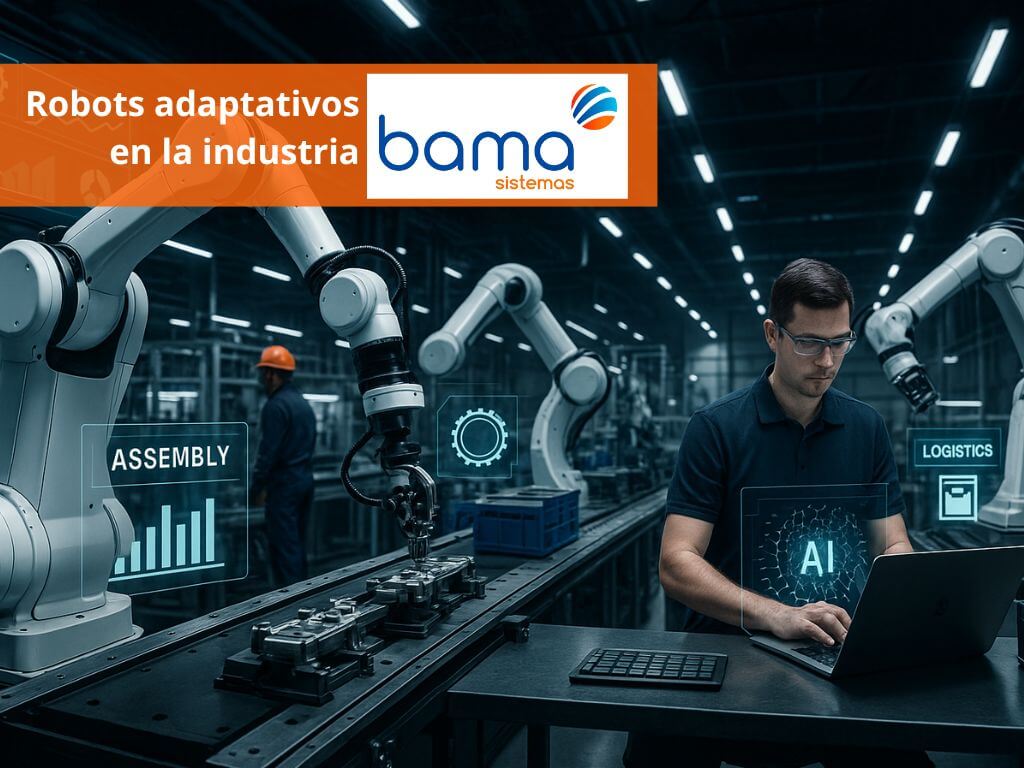
Traditional robotics, programmed for repetitive tasks in structured environments, is giving way to a new generation of autonomous systems: adaptive robots. These systems, equipped with technologies that enable dynamic responses to unforeseen changes, are transforming complex industrial processes in Spain. According to data from the International Federation of Robotics, Spain is already the third European power in industrial robot installations, with 5,160 new units in 2024, leading sectors such as food (+25.3% annually) and electricity/electronics (+118%). This article analyzes the technical capabilities, practical applications, and trends of this adaptive revolution.
What are Adaptive Robots?
Adaptive robots are advanced robotic systems capable of modifying their behavior and action strategies based on the environment and the task they are performing. Unlike traditional robots, which follow predefined routines, these systems use advanced sensors, artificial intelligence (AI), machine learning algorithms, and perception systems to adapt dynamically.
This adaptability is based on three fundamental technological pillars:
- Advanced multisensory perception: They integrate LiDAR sensors, 3D RGB-D cameras (like Figure 02’s 6 cameras), and tactile systems that generate environmental maps with millimeter precision.
- Autonomous decision-making: They use AI models based on deep reinforcement learning (DRL) to simulate scenarios and optimize actions. Figure AI’s Helix model, for example, combines vision, language, and action to interpret natural language commands.
- Dynamic motion control: Motors with torque feedback and elastic actuators allow for force adjustments in milliseconds, essential for manipulating deformable objects like textiles or food.
Differences from Traditional Robots
A traditional robot requires manual reprogramming for any change in the environment or product. In contrast, an adaptive robot detects changes and adjusts its actions without direct human intervention. This capability makes it a versatile solution for industrial environments where customization and flexibility are key.
Key Technologies of Adaptive Robotics
The dynamic adaptability of these robotic systems is based on an interconnected technological ecosystem. Three pillars are fundamental: adaptive Artificial Intelligence for contextual decision-making, digital twins that accelerate learning in simulated environments, and modular hardware that ensures physical versatility.
1. Adaptive Artificial Intelligence
Federated learning algorithms allow fleets of robots to share knowledge without compromising sensitive data. In most cases, VLA (Vision-Language-Action) models are implemented so that cobots understand commands like “adjust the tightening torque on part X or Y”.
2. Digital Twins for Adaptive Training
Virtual simulations replicate real conditions (humidity, vibrations) to train robots. ABB uses digital twins in Barcelona plants, reducing the setup time for complex assembly tasks by 40%.
3. Modular Hardware
Robots like the RB-THERON offer interchangeable modules: pneumatic grippers for delicate manipulation (e.g., eggs) or electromagnetic grippers for heavy loads, adapting to new tasks in minutes.
| Technology | Accuracy | Industrial Application |
|---|---|---|
| 360° LiDAR | ±2 mm | Navigation in logistics warehouses |
| Spectral Cameras | 0.1 nm (bandwidth) | Food quality control |
| Tactile Sensors | 0.05 N force | Microelectronics assembly |
Perception Technologies in Adaptive Robots
Specialized Industrial Applications
The versatility of adaptive robots is not limited to theory: they are already transforming key industrial sectors with highly specialized applications.
Assembly, Handling, and Precision Tasks
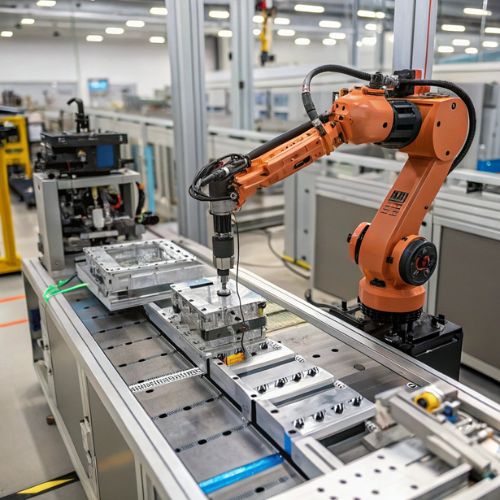
In sectors such as automotive, aerospace, and consumer electronics, adaptive robots assemble fragile, micro-structured, or customized components with a level of precision impossible to replicate with conventional solutions. Thanks to haptic detection and reactive force control, they can handle deformable parts or those with tight tolerances without damage. Furthermore, by not relying on fixed tooling, they automatically adapt to changes in geometries or short production runs, making them ideal for flexible manufacturing strategies.
Quality Inspection with Adaptive Vision
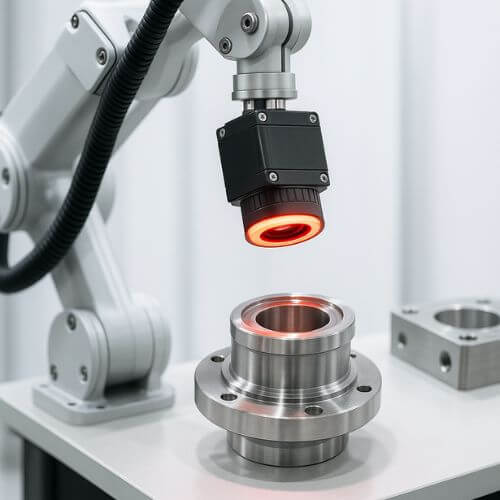
Through computer vision algorithms combining AI and continuous learning, adaptive robots perform real-time inspections that surpass the capabilities of rigid systems. They detect subtle defects such as micro-cracks, dimensional deviations, or texture alterations, and automatically adjust their capture and analysis parameters based on the product type, lighting, or production line pace. This ensures complete traceability and a significant reduction in false detection rejections.
Internal Logistics and Collaborative Mobile Robotics
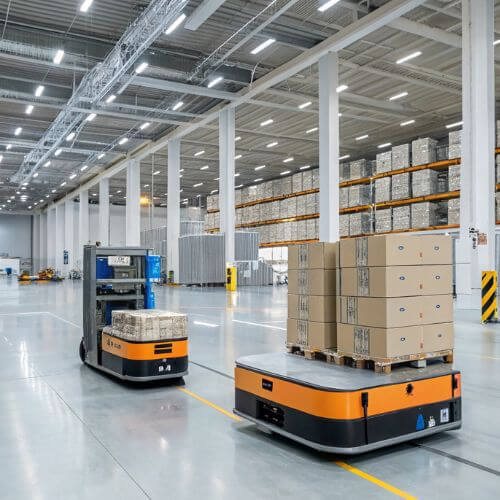
In smart warehouses, production plants, and logistics centers, adaptive mobile robots (AMRs) plan routes, navigate dynamic obstacles, and collaborate in real-time with human operators. Equipped with SLAM, LiDAR sensors, and AI modules for contextual interpretation, they optimize material flows, reduce travel times, and minimize collision risks. Additionally, they easily integrate with warehouse management systems (WMS) and ERP to make autonomous decisions regarding replenishment, picking, or internal delivery.
Benefits and Challenges of Implementing Adaptive Robotics
As these systems integrate into the value chain, tangible benefits in efficiency and safety emerge, while new challenges in interoperability and human management arise. This section examines the most significant impacts of their implementation in the Spanish productive environment.
Productivity, Safety, and Industrial Sustainability
Adaptability increases operational availability, reduces downtime, and improves ergonomics for human workers. It also optimizes resources by avoiding redundant processes.
Interoperability and Standards in Heterogeneous Environments
A key technical challenge is ensuring compatibility with existing systems (ERP, MES, IoT). Standardization initiatives like OPC UA or ROS 2 facilitate this integration.
Ethical Challenges and Change Management
The introduction of autonomous systems poses challenges in job acceptance, role reassignment, and accountability for errors. Transparency in decision-making and continuous training are essential.
Strategies for Successful Adoption
Successfully adopting adaptive robotics requires more than technological investment: it demands strategic vision, specialized training, and intelligent integration with existing systems. These are the practical keys for its scalable implementation in Spanish industry.
Technical Training and Public-Private Collaboration
It is essential to train technical teams in robotics, AI, and adaptive maintenance. Public-private initiatives and platforms such as the IRI or specialized online courses accelerate the professionalization of industrial talent. Furthermore, many industrial robotics companies in Spain collaborate with universities and R&D centers to foster the development of highly qualified profiles.
Integration with Industry 4.0 and IoT
Adaptive robots must connect to IoT networks, analytics platforms, and MES/ERP systems. This synergy facilitates autonomous decisions and improves operational efficiency.
Roadmap and Trends until 2028
According to Data Bridge Market Research, this market will grow by 18% annually until 2028. The three key trends are:
- Greater autonomy and embedded intelligence: robots with greater local decision-making capacity without relying on external servers.
- Seamless human-robot collaboration: systems that interpret human intentions, adapt their behavior, and ensure contextual safety.
- Mass customization in production lines: robots that change configuration and tools on the fly to produce short runs without loss of efficiency.
Spain at the Adaptive Forefront
Adaptive robotics transcends automation: it is a strategic partner for industrial resilience. With Spain as the third-largest European market, its adoption will be key to maintaining competitiveness, especially in high-value sectors such as food, automotive, and renewables. Next Generation EU funds allocate €4 billion to industrial digitalization, an opportunity for SMEs to integrate this technology. The synergy between advanced engineering, contextual AI, and human-centered design will define the new era of Spanish manufacturing.
Are you ready to integrate adaptive robots into your industrial environment?
Contact our team and discover how to optimize your production with advanced adaptive robotics solutions.