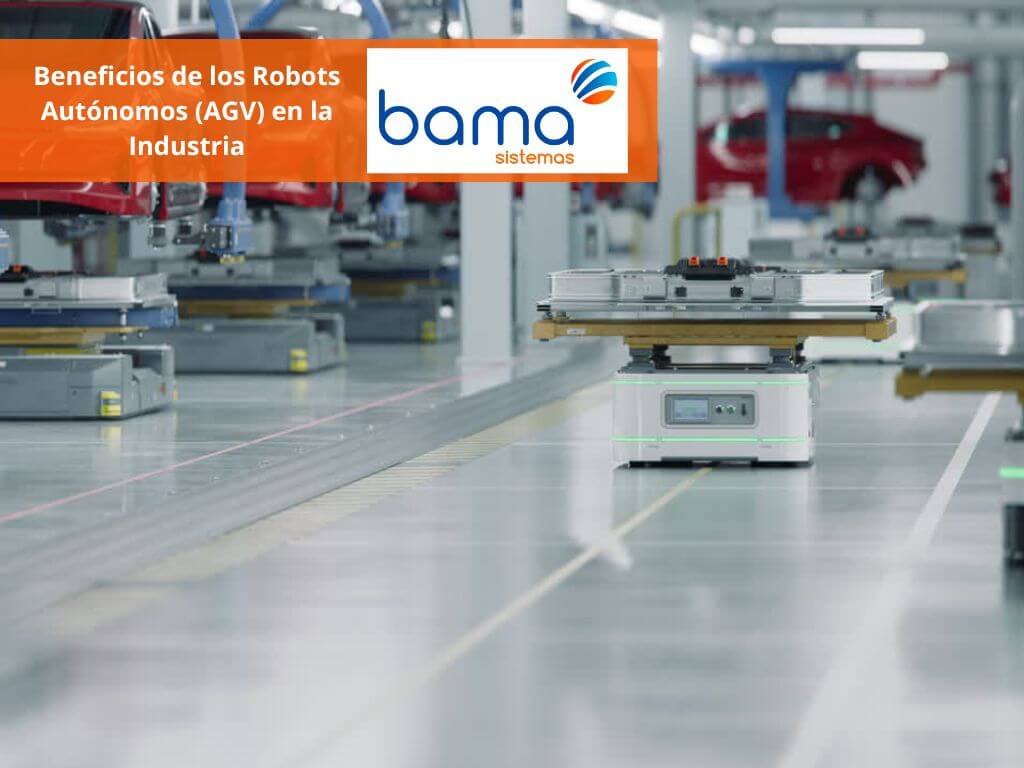
Industrial automation has taken a significant step forward with the implementation of Automated Guided Vehicles (AGVs). These autonomous systems are revolutionizing the way materials are transported within factories, warehouses, and distribution centers, offering greater precision, safety, and operational efficiency. With the incorporation of advanced technologies such as 5G, AGV capabilities have been elevated to a new level, allowing for real-time supervision and unprecedented optimization in industrial processes.
In this article, we will explore in depth the main benefits that AGV robots bring to the industry and how they are redefining internal logistics and manufacturing. If you are considering integrating AGV systems into your company, this content will help resolve your doubts and explain why this technology is key to the future of industrial automation.
Operational precision and error reduction
One of the most outstanding attributes of AGVs is their ability to execute repetitive tasks with a virtually zero error rate. While human workers may experience fatigue, distractions, or errors in material handling, AGVs operate with millimeter precision.
Millimeter precision in navigation
The key to the high level of precision in AGVs lies in their advanced navigation and control systems. These robots are equipped with positioning sensors, computer vision cameras, and laser mapping technology (LIDAR), allowing them to move accurately within complex industrial environments.
Unlike human operators, who may deviate from established routes due to fatigue or distraction, AGVs follow predefined paths with total fidelity. This ensures that materials are transported without deviations, avoiding collisions, time loss, and damage to the load.
Elimination of human error in material handling
One of the greatest challenges in internal industrial logistics is the variability inherent to the human factor. Small errors in product handling can translate into damage to goods, waste of raw materials, or failures in the production chain.
AGVs eliminate this problem by executing each task with the same precision time and again. Their advanced programming allows them to handle loads safely, avoiding impacts or tilts that could compromise product integrity. This is especially critical in sectors such as automotive, pharmaceutical, and food, where any failure can generate significant economic losses and affect the final quality of the product.
Thanks to their advanced programming and navigation sensors, these robots follow predefined routes exactly, ensuring that production remains standardized and error-free. This reduces raw material waste and avoids additional costs generated by human error.
Workflow optimization and line balancing
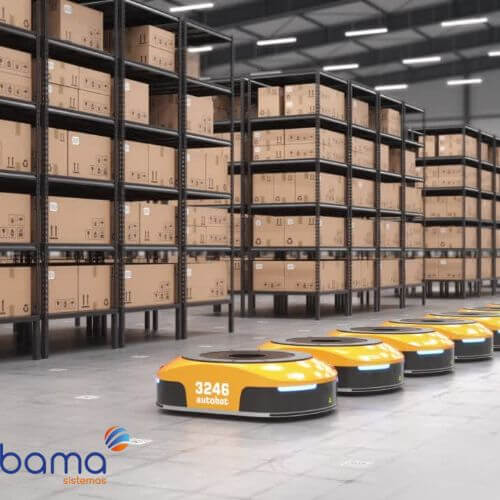
Workflow optimization and line balancing are fundamental pillars for maximizing efficiency in industrial environments. These concepts refer to the strategic organization of production processes to eliminate bottlenecks, reduce downtime, and ensure that each workstation operates at the same pace. AGVs (Automated Guided Vehicles) play a key role in this area, transforming internal logistics with their ability to deliver materials accurately, timely, and autonomously.
How AGVs transform workflow:
AGVs are designed to integrate intelligently into production lines. Unlike traditional transport methods, such as fixed conveyors or manual handling, these robots operate with programmable dynamic routes that adapt to changing production needs. For example, in an automotive assembly plant, AGVs transport components such as engines, chassis, or electronic systems directly to the workstations that require them, ensuring that no line stops due to a lack of supplies.
Enabling technologies
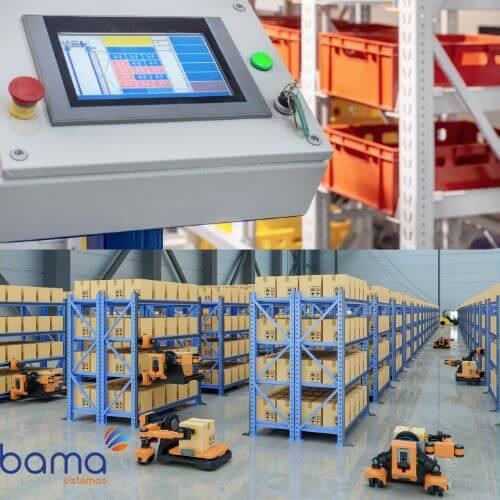
The efficiency of AGVs is enhanced by technologies such as:
- Prioritization systems: Software that assigns critical tasks to AGVs based on urgency or location.
- 5G and IoT: Enable ultra-fast communication between robots and central systems, facilitating instant route adjustments.
- Machine learning: Algorithms that predict demand patterns and optimize AGV trajectories to avoid congestion.
Line balancing: The key to balanced production
Line balancing involves distributing workloads evenly among production stations to avoid overloads or underutilization of resources. AGVs contribute to this balance by:
- Integrating with management systems: Through connection to ERP or MES software, AGVs receive real-time updates on changes in demand or priorities.
- Synchronize deliveries: They supply materials exactly when they are needed, following a schedule based on actual demand.
- Redistributing loads: If one station progresses faster than another, AGVs can redirect supplies to level the production pace.
Flexibility for complex environments
In logistics warehouses or distribution centers, where the physical layout changes constantly, AGVs offer a unique advantage: they can be reprogrammed in minutes to follow new routes without the need to modify infrastructure. This is vital for companies handling seasonal production or custom orders.
Safety and reduction of workplace accidents
Safety in industrial environments is an absolute priority, and AGVs (Automated Guided Vehicles) have become an effective solution for minimizing occupational hazards and creating safer workspaces. These robots are designed with advanced technologies that ensure safe operation, even in dynamic environments with a high presence of personnel.
This not only prevents accidents that could result in injuries but also minimizes incidents by protecting the integrity of the transported products, reducing losses due to damage to goods.
Safety technologies in AGVs
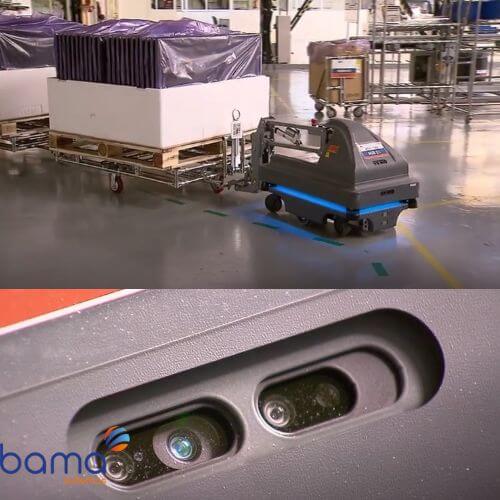
AGVs are equipped with a combination of optical sensors, LiDAR lasers, 3D cameras, and obstacle detection systems. These technologies allow robots to perceive their environment in real time and make instant decisions to avoid collisions. For example:
- Obstacle detection: If an operator or an object gets in the AGV’s path, it can stop automatically or change its trajectory to avoid impact.
- Safety zones: AGVs can be programmed to reduce their speed in areas with high personnel density or stop completely in critical zones.
- Visual and audible alerts: Many AGVs include LED lights and alarms that warn workers of their presence, especially in noisy areas or those with low visibility.
Compliance with safety regulations
AGVs are designed to comply with the strictest industrial safety regulations, such as those established by OSHA (Occupational Safety and Health Administration) or ISO 3691-4. This includes features such as:
- Certifications: Compliance with international standards that guarantee their safe use in industrial environments.
- Emergency stops: Accessible stop buttons in case of failures.
- Redundant systems: Multiple sensors and backup systems to ensure safety even in the event of technical failures.
Flexibility and adaptability in route configuration
One of the most outstanding advantages of Automated Guided Vehicles (AGVs) is their exceptional ability to adapt to changes in the layout and configuration of the workspace. Unlike traditional automated transport systems, such as fixed conveyor belts, AGVs offer great operational flexibility. This is due to their ability to be reprogrammed to follow new routes without requiring additional infrastructure or costly modifications to the facilities.
This feature is particularly beneficial in sectors such as logistics centers and factories with diversified production, where the space layout may change frequently to adjust to new production or logistics demands.
Dynamic adaptation to variable spaces
AGVs are equipped with advanced technologies, such as LiDAR sensors, 3D cameras, and map-based navigation systems, which allow them to perceive and understand their environment in real time. This means that when changes occur in the plant layout or transport routes, AGVs can be quickly reprogrammed to adapt to the new distribution. This adaptability not only ensures production continuity but also optimizes the use of available space, which is essential in highly complex industrial environments.
Benefits of flexibility in route configuration
- Reduction of Interruptions: Unlike fixed systems, which require stopping production to make changes, AGVs allow adjustments without interrupting operations. This maximizes the availability of the production line.
- Greater Agility: AGVs can adapt to different types of products, workloads, and processes, allowing them to operate efficiently in both mass production and small batch production.
- Space Optimization: By being able to follow flexible routes, AGVs contribute to maximizing space usage within the facilities, which is crucial in large warehouses or environments with a dynamic layout.
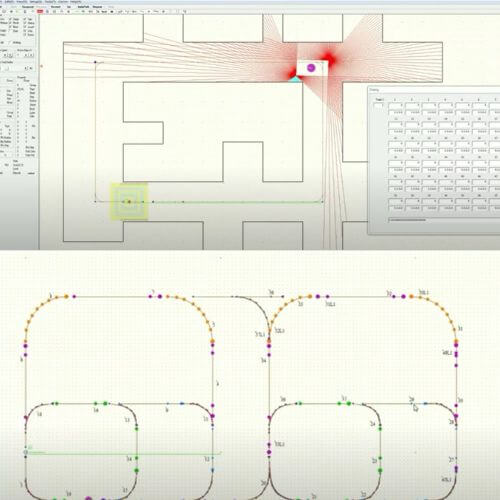
The ability of AGVs to adapt quickly to new configurations allows companies to maintain high operational efficiency without incurring the costs and downtime associated with reconfiguring fixed systems.
Integration with 5G technology for real-time supervision
The arrival of 5G connectivity has marked a turning point in the efficiency and functionality of AGVs (Automated Guided Vehicles). This technology not only improves data transmission speed but also reduces latency (the response time between devices) to almost imperceptible levels (less than 1 millisecond). This allows for real-time supervision of AGVs, transforming the way companies manage their logistics and production operations.
How 5G powers AGVs
- Real-time monitoring:
With 5G, AGVs can transmit data about their location, charge status, speed, and sensor condition in real time. This allows operators and central systems to have complete visibility of operations at all times.- Example: In a logistics warehouse, a supervisor can see on a screen where all the AGVs are, what they are transporting, and if there are any bottlenecks in the routes.
- Instant adjustments:
Thanks to the low latency of 5G, AGVs can receive instructions almost immediately. If a robot detects an obstacle or a blocked route, the central system can redirect it in a matter of milliseconds, avoiding delays.- Example: In an assembly plant, if a workstation urgently needs a component, the system can reprogram a nearby AGV to deliver it without affecting other tasks.
- Resource optimization:
5G allows for massive communication between devices, facilitating coordination between multiple AGVs and other automated systems (such as robotic arms or drones). This optimizes resource use and reduces downtime.
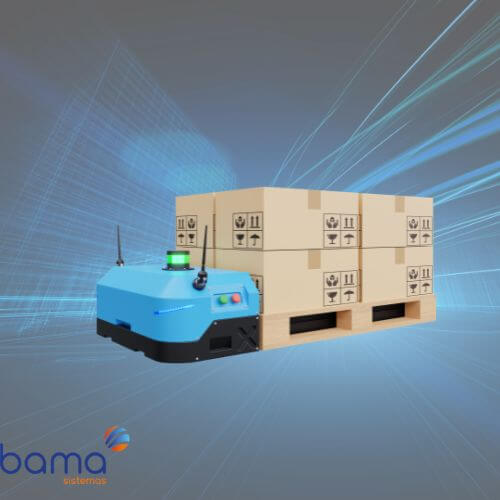
AGV applications in various industrial sectors
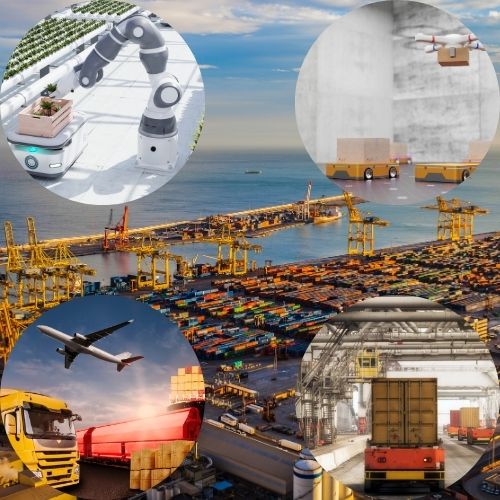
While AGVs began their expansion in manufacturing, today their use has extended to multiple sectors, such as logistics, e-commerce, and the food industry. Their ability to operate in adverse environments, such as cold storage rooms or high-heat zones, makes them ideal for various applications.
In ports, for example, AGVs are already being used to improve safety and efficiency in container handling, such as at the Port of Barcelona. Their implementation in hospitals is also on the rise, facilitating the autonomous transport of medications and medical supplies.
Applications in key sectors
- Logistics and e-commerce: AGVs are essential in distribution centers and warehouses, where they handle the autonomous transport of goods. In e-commerce, where speed and precision are key, AGVs optimize inventory management, order preparation, and product transport efficiently, helping to improve delivery times and reduce human error.
- Ports and maritime terminals: In ports like Barcelona, AGVs are improving safety and efficiency in container handling. These robots can operate 24/7, without rest, in environments that are often dangerous due to working conditions or the presence of heavy machinery. This reduces risks associated with human operation while speeding up cargo processing times.
- Hospital sector: In hospitals, AGVs are being used to transport medications, medical supplies, and other sensitive materials. This not only optimizes logistics processes within hospital facilities but also improves safety, reducing the possibility of human error in the distribution of these critical products. Additionally, AGVs allow for operation in highly sterile and contamination-free environments, which is essential in these spaces.
- Food industry: AGVs also have a significant impact on the food industry, where hygiene and safety are priorities. In this sector, they handle the transport of raw materials, products in process, and finished products, ensuring that cleaning conditions and sanitary regulations are not compromised. Furthermore, in facilities with high humidity environments, AGVs can operate constantly without the need for rest breaks, improving efficiency and production.
- Corrosive and hazardous environments: In sectors such as mining or chemical production, where corrosive and flammable environments represent a constant risk to human workers, AGVs offer a safe solution by being able to operate in these environments without risk of exposure. This not only protects worker health but also minimizes production interruptions.
Versatility and a promising future
The ability of AGVs to operate in a wide variety of difficult conditions, such as high noise, humidity, heat, and corrosion environments, gives them a significant advantage in various industries. Their use in sectors as varied as logistics, healthcare, and chemical production continues to grow, and innovative applications for AGVs are expected to increase in the future. This will undoubtedly continue to transform industrial automation and offer efficient and safe solutions in complex environments.
Automated Guided Vehicles (AGVs) are redefining industry standards, offering advanced solutions to improve precision, safety, and profitability in operational processes.
With the integration of technologies such as 5G, artificial intelligence, and advanced guidance systems, AGVs continue to evolve, allowing companies to reach unprecedented levels of automation. The adoption of these robots not only improves market competitiveness but also leads the way toward a more efficient, flexible, and safe industry.
Is your company ready to take the next step in industrial automation?
At BAMA, we are experts in the implementation of AGV systems and other industrial automation solutions. If you want to optimize your processes, reduce costs, and improve your production efficiency, contact us today! Our team will be happy to advise you and offer the best solution adapted to your needs.
We hope you found this article of interest.
Is your company ready to take the next step in industrial automation?
At BAMA, we are experts in the implementation of AGV systems and other industrial automation solutions.