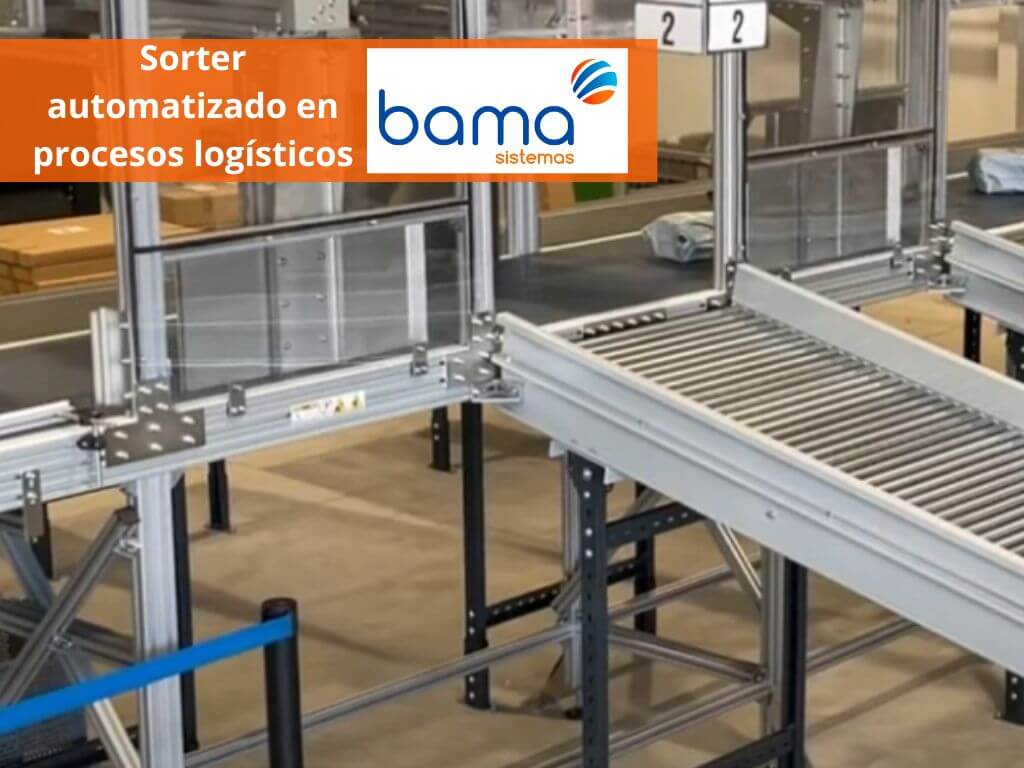
Modern logistics demands speed, precision, and scalability. In this context, automated sorting systems (sorters) have become a key component for distribution centers, warehouses, and logistics operators. But how exactly do they work? What types exist and what advantages do they offer? In this article, we will explore in detail the technology behind automated sorters, their applications, and how they are revolutionizing freight management.
What is an automated sorter?
A sorter (automatic parcel classifier) is a system designed to organize, separate, and direct products toward their corresponding destination within a logistics chain. It operates using advanced technologies, such as sensors, scanners, conveyor belts, and computer vision, which allow for the identification and classification of goods without human intervention.
How does it work?
The operation of a sorter follows an optimized sequence that includes:
- Identification: The item enters the system and is scanned by automatic readers that collect information such as barcode, weight, dimensions, or destination.
- Processing: The captured data is interpreted in real-time through algorithms that determine the appropriate channel or exit point.
- Sorting: The system directs the product using mechanisms such as tilt trays, sliding shoes, or cross-belts.
- Dispatch or storage: Finally, the product is sent to its final location according to the logistical planning.
This process allows for efficient and error-free management, reducing processing times and maximizing operational performance.
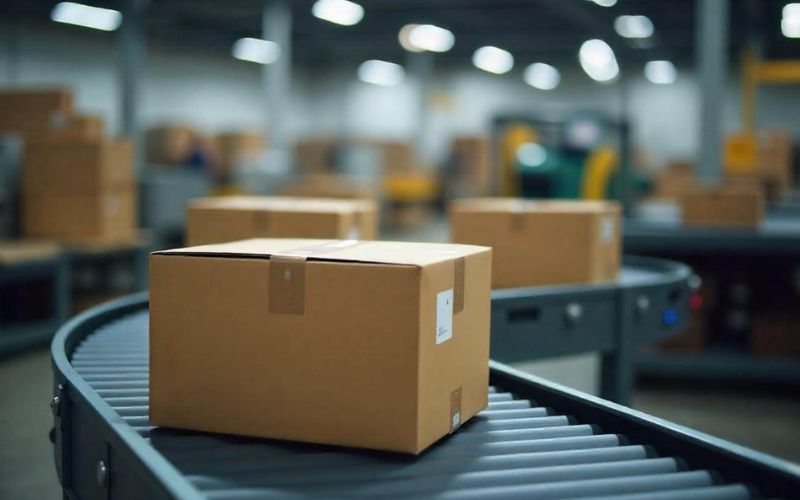
Types of automated sorters
Depending on the type of merchandise, processing volume, and warehouse design, different sorter systems exist. These are the most commonly used:
1. Tray Sorter
The tray sorter consists of a series of mobile trays mounted on a motorized transport line. Each tray individually carries a product until it reaches its destination. At that point, the tray tilts or opens laterally, allowing the item to drop gently into a hopper or collection chute.
Advantages: Minimizes impacts; ideal for fragile products such as electronics or glassware.
Capacity: Up to 6,000 units per hour.
2. Shoe Sorter (Sliding shoe sorter)
This system uses a conveyor belt with mobile shoes installed along the conveyor. When the product reaches its destination point, one or more shoes move laterally, pushing the package toward a secondary belt or an exit channel.
Advantages: Excellent for irregularly shaped objects or varied sizes.
Typical application: Courier and express parcel centers.
3. Cross-Belt Sorter
The cross-belt sorter consists of a series of small belt conveyors placed perpendicularly on a main conveyor belt. Each transverse belt can move in both directions (left or right), precisely depositing products at the corresponding exit.
Advantages: High degree of accuracy and performance. Very useful in e-commerce and sectors with high SKU turnover.
4. Vertical Sorter (Multi-level sorter)
This system uses vertical mechanisms, such as elevators, sorting towers, or chutes, to distribute products across different levels or floors. It works with lifting platforms that transport products to the desired height, where they are ejected via pushing mechanisms or gravity.
Operation: Sorts products at different heights using elevators or intelligent chutes.
Advantages: Space-saving in warehouses with horizontal surface limitations.
Key benefits of automated sorters in logistical environments
The adoption of automated sorting systems is not just a trend, but a necessary response to the challenges of modern logistics: higher order volumes, lower margins for error, and demands for record delivery times. Below, we break down the main benefits that automated sorters bring to any logistical operation:
Practical applications in logistics
Automated sorters have become a strategic tool in various areas:
Distribution centers: For rapid and massive order sorting.
Logistics operators and transport hubs: Efficient processing during night shifts or high-demand periods.
E-commerce and retail: Improved delivery speed and order preparation capacity in the face of growing digital consumer demands.
Is it profitable to invest in an automated sorter?
Without a doubt, the automation of logistical sorting represents a strategic investment rather than an expense. Although the initial cost can be high, the return in terms of operational efficiency, error reduction, economic savings, and the ability to scale the operation makes it a highly profitable solution.
For companies managing a high volume of goods, with a need for agility and precision, the implementation of an automated sorter can mark a before and after in their logistical performance.
We hope you found this article of interest.
Optimize times, reduce errors, and scale your operation with automated sorting technology.
Frequently asked questions about automated parcel sorters
1. How do I know if my company needs an automated sorter?
If your operations suffer from sorting delays, frequent errors in channeling, or space limitations, an automated sorter can improve productivity, reduce errors, and optimize logistical flow without increasing headcount.
2. Which type of sorter best fits the product I handle?
For fragile or delicate products, the Tray Sorter is ideal because it minimizes impacts. If you handle packages of varied shapes or large volumes, the Shoe Sorter is more flexible. For high speed and precision in e-commerce, the Cross-Belt Sorter works best; and if you have horizontal space limitations, the Vertical Sorter is the most efficient option.
3. What advantages does an automated sorter offer over a manual system?
Benefits include continuous 24-hour sorting, reduction of human errors, greater precision in goods destination, operational scalability, and a notable improvement in overall storage and distribution efficiency.
4. How is an automated sorter integrated into my current warehouse?
Your logistical layout is studied and the appropriate technology is selected (integration platforms, flow automation, identification systems). The goal is to implement it without needing to change existing structures, making the most of what you already have.
5. How long does it take to recover the investment in an automated sorter?
Although it depends on the volume managed, investment costs are quickly amortized thanks to savings in personnel, error reduction, shorter processing times, and the improvement in operational capacity that generates a noticeable return within months.
6. Can I use an automated sorter during peak season or activity spikes?
Yes. The systems are designed to operate in changing environments and handle activity peaks without becoming overloaded. Their flexibility allows for increased performance during intensive campaigns and a return to normal levels without issues.
7. How can Bama Sistemas help me with my automated sorter project?
At Bama Sistemas, we accompany the entire process: diagnosis, custom design of the sorter that best fits your operation, technical integration with your current system, and operational startup. Our focus is to help you scale your logistics safely and efficiently.