Robotic quality control has revolutionized various industries, enabling faster, more precise, and more efficient inspections. From manufacturing to electronics and food, the implementation of advanced technologies ensures products meet high quality standards, reducing costs and minimizing errors. Furthermore, a well-structured quality control program is key to optimizing these processes and ensuring result traceability.
In this article, we will explore the main technologies used in automated quality control with robots, the types of automated quality control systems, their benefits, and the challenges involved in their implementation across different sectors.
Technologies Used in Automated Quality Control
Robots in quality control systems incorporate various advanced technologies that allow them to detect defects and ensure product uniformity with high precision. Some of the most notable include:
1. Machine Vision and Imaging Systems
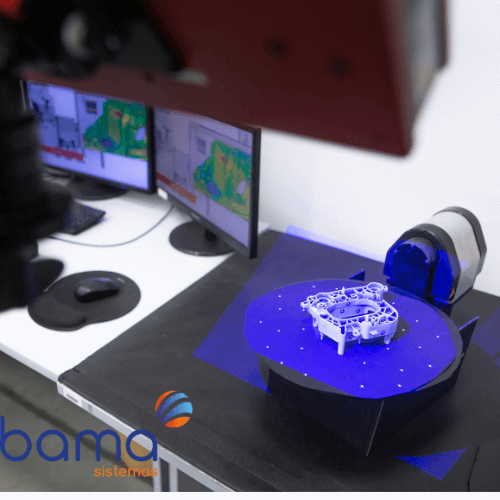
Machine vision is one of the most powerful tools in automated quality control. Using high-resolution cameras like MetraSCAN, quality control software, and image processing algorithms, robots can capture minute details of products and detect defects with superior precision compared to human inspection. These cameras, combined with advanced software (VXelements, PolyWorks), enable real-time inspection of every unit produced.
The main aspects they can detect include:
- Surface and finish irregularities: Cracks, scratches, bubbles, or structural defects in metallic, plastic, or glass materials.
- Labeling or coding errors: Blurry printing, incorrect labels, or misplaced barcodes.
- Deviations in component assembly: Inaccurate positioning, missing components, or misalignments in high-precision assembly processes.
- Contamination or foreign bodies in food products: Presence of unwanted particles in packaged goods or fresh food.
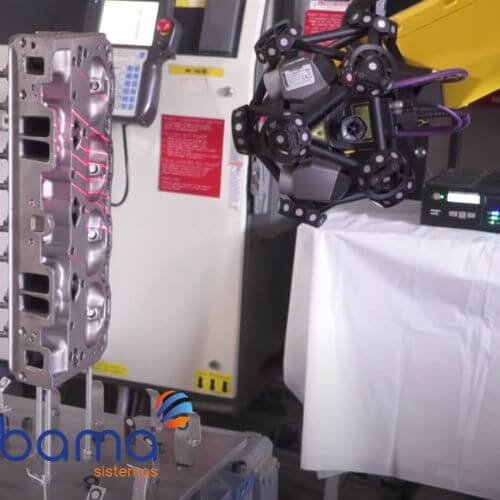
The use of artificial intelligence (AI) continuously improves the accuracy of these systems, allowing them to detect flaws that would go unnoticed in manual inspections. Machine learning algorithms analyze large volumes of data and identify patterns to reduce false positives and optimize inspection processes. Additionally, machine vision systems can be integrated with hyperspectral sensors to analyze the chemical composition of products, ensuring even stricter quality standards. unnoticed in manual inspections.
2. High-Precision Sensors
Advanced sensors play a fundamental role in automated quality control in production processes, providing accurate real-time measurements and ensuring product uniformity. Key types of sensors used include spectrometers, pressure sensors, and measurement lasers.
Some of their most important applications include:
- Exact measurement of product weight and size: Weight and dimension sensors verify that products comply with established specifications, detecting any minimal deviation. This is crucial in industries such as pharmaceuticals, where dosage must be precise, or in manufacturing, where assembly requires exact tolerances.
- Verification of material strength and hardness: Using pressure sensors and micro-hardness tests, robots can evaluate the mechanical resistance of industrial components, ensuring that materials meet required standards. This technology is essential in the automotive and aerospace industries, where material safety and durability are priorities.
- Structural integrity control in industrial parts: Laser and ultrasound sensors identify cracks, deformations, or defects in metallic, plastic, or ceramic structures. This technology is applied in weld inspection, fault detection in pipes, and evaluation of high-precision electronic components.

The use of these sensors allows robots to perform evaluations with a level of detail superior to human inspection, improving reliability and efficiency in quality control processes.
Robotic Arms and Handling Systems in Industrial Quality Control
Robotic arms and handling systems play a fundamental role in quality control across various industries, ensuring precise inspections, error reduction, and compliance with strict regulations. Equipped with specialized grippers, suction cups, and high-precision handling tools, these robots can manipulate products without contamination and with total accuracy, improving the efficiency and reliability of inspection processes.
Applications in Quality Control in the Pharmaceutical Industry
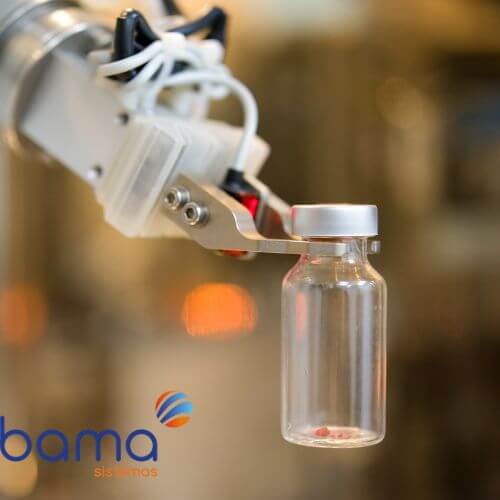
In the pharmaceutical industry, robotic arms ensure that every medication, vial, or capsule meets quality standards before distribution. Their main functions include:
- Handling and sorting of medications: Preventing cross-contamination and ensuring each batch meets required specifications.
- Inspection of vials and syringes: Used to verify exact fill volume, hermetic sealing, and the absence of foreign particles.
- Automated testing: In pharmaceutical laboratories, robots handle samples to perform physical and chemical assays without the risk of human error.
Applications in Quality Control in Other Industries
- Robotic handling systems are also essential in other industries that require high levels of precision and consistency in their products:
- Food industry: Controlling product handling to prevent contamination and ensure correct packaging and labeling.
- Electronics: Verifying correct micro-component placement and detecting circuit defects without human contact.
- Automotive: Inspecting welds, assemblies, and vehicle paint with millimeter precision.
Thanks to these systems, companies can ensure safe, standardized, and defect-free products, optimizing their quality control processes efficiently and cost-effectively.
4. Artificial Intelligence and Machine Learning
Artificial intelligence (AI) and machine learning have transformed quality control in multiple industries by providing automated, precise, and continuously improving inspection processes. These technologies enable robots to learn from large volumes of data and optimize defect identification over time.
The main applications of AI in quality control include:
- Continuous improvement in defect detection: Deep learning algorithms analyze images, sensor data, and production records to identify patterns and detect defects with unprecedented accuracy. This is essential in sectors like electronics and pharmaceuticals, where even small imperfections can affect product performance and safety.
- Prediction of production failures: Through the analysis of historical and real-time data, AI can foresee potential failures before they occur, allowing for preventive adjustments in the production line. This reduces waste and downtime.
- Reduction of false positives and negatives in inspections: AI systems minimize errors in defect classification, ensuring that only faulty products are discarded, preventing unnecessary rejection of good products.
- Automation of the inspection process: AI-equipped robots can perform uninterrupted reviews, ensuring that quality control is uniform and consistent over time.
- Regulatory compliance and traceability: In highly regulated industries, such as pharmaceuticals and aerospace, AI allows for documentation of each inspection and ensures processes comply with international standards.
With the continuous evolution of AI and machine learning, companies can improve their operational efficiency, reduce costs, and ensure high-quality products, positioning themselves advantageously in highly competitive markets.
Benefits of Automated Quality Control
✓ Greater Precision and Consistency
Robots eliminate human variability in inspections, ensuring a uniform evaluation of each produced batch. Automation minimizes errors and allows inspections to be repeatable and standardized, guaranteeing that defects are identified with precision.
✓ Cost Reduction
Implementing robots in quality control significantly reduces operational costs. Early defect detection minimizes material waste, avoids rework, and improves resource utilization, leading to substantial long-term savings.
✓ Improved Regulatory Compliance
Highly regulated industries, such as pharmaceuticals and aerospace, require precise traceability and documentation in their quality processes. Automated systems record each inspection in real-time, facilitating audits and ensuring compliance with international regulations.
✓ Real-time Inspection
The use of robots allows for in-line inspections, without the need to stop production. This improves efficiency and reduces downtime, ensuring that defective products are identified and corrected before reaching the market.
✓ Enhanced Safety
Automation minimizes worker exposure to hazardous or contaminating environments, reducing the risk of workplace accidents. Additionally, robots can operate in extreme conditions, such as extreme temperatures or controlled atmospheres, where human presence could be risky.
Applications in Various Industries
Automated quality control with robots is key in multiple sectors, such as:
Manufacturing: Inspection of assembly and precision in mechanical parts.
Electronics: Verification of welds and circuits in technological devices.
Food and beverages: Detection of contaminants and packaging control.
Pharmaceutical industry quality control: Ensuring exact dosage and packaging review.
Challenges in Implementing Robots for Quality Control
Although robots offer significant advantages in quality control, their adoption is not without challenges:
- High Initial Costs: The investment in necessary technology, as well as staff training, can be a considerable obstacle.
- Staff Training: It is essential to train employees in the operation and maintenance of automated systems to ensure optimal functioning.
- Resistance to Change: The introduction of new technologies can generate resistance among staff, who may feel uncomfortable with the transition to automated processes.
- Integration with Existing Processes: Adapting robots to established infrastructures and processes can be a challenge, especially regarding space, resource availability, and compatibility with previous systems.
- Updates and Maintenance: Periodic calibrations and updates are essential to ensure robots continue to operate with maximum precision and efficiency.
The automation of quality control with robots is a growing trend that allows companies to improve precision, reduce costs, and optimize operational efficiency. As technologies advance, these solutions are expected to become even more accessible and adaptable to various industries, consolidating their role in modern production.
The implementation of these systems not only guarantees product quality but also drives competitiveness and innovation in the global market.
We hope this article has been of interest to you and has provided the information you were looking for.
If you have any questions or require further details to implement robot automations, we are at your disposal. Do not hesitate to contact us for the necessary support.